Patients with mitral valve dysfunction coupled with mitral annular calcification (MAC) who were treated via transcatheter mitral valve replacement (TMVR) using the Sapien M3 system (Edwards Lifesciences) saw a lower rate of mortality at 30 days than predicted by their surgical risk, coupled with “significant and sustained” reductions in mitral regurgitation (MR).
These are the findings of a prospective, single-arm, multicentre registry study of the device, a part of the ENCIRCLE pivotal trial looking at the use of Sapien M3 in patients with symptomatic, moderate-to-severe MR who could not receive surgery or mitral-transcatheter edge-to-edge repair (M-TEER).
MAC is a fibrous, degenerative calcification of the mitral valve support ring that is associated with MR, mitral stenosis (MS), or a combination of these valvular lesions, and can pose challenges for surgical correction, limiting treatment options.
“Patients with symptomatic mitral valve dysfunction and mitral annular calcification are often poor surgical candidates; therefore, transcatheter mitral valve replacement is emerging as a potential treatment option for these high surgical risk patients,” said Mayra Guerrero (Mayo Clinic Hospital, Rochester, USA), presenting the results of the ENCIRCLE trial MAC registry at New York Valves 2026 (24–26 June, New York, USA).
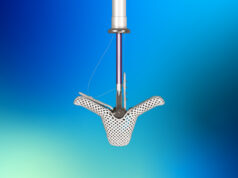
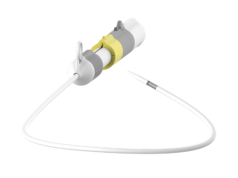
The Sapien M3 system is a transseptal TMVR system that consists of two parts, a retrievable docking platform that is designed to encircle the native mitral valve leaflets and to provide a landing zone for the valve, which is comprised of three bovine pericardial tissue leaflets, a cobalt-chromium frame and a full-frame PET skirt.
Patients were enrolled in the registry study if they had MAC and ≥3+ MR, moderate MR and moderate MS, or severe stenosis. All had to be deemed unsuitable for surgery or TEER by their local heart team.
Across 36 sites throughout the USA, Canada, Netherlands, UK and Australia, investigators screened a total of 364 patients for inclusion in the registry, 100 of whom were ultimately treated, with 93 receiving the Sapien M3 valve. Of these, 88 were alive at 30 days, and 73 alive and available for follow-up at one year.
The study population has a mean age of 76 years, roughly half (51%) were male, and the mean Society of Thoracic Surgeons Predicted Risk of Mortality (STS-PROM) for mitral valve replacement (MVR) stood at 8.4%—putting them in a high-risk bracket. Other patient characteristics detailed by Guerrero included a high prevalence of atrial fibrillation (AF, 66%), around 14% prior stroke, and prior aortic valve replacement in almost half of patients (48%). MAC severity, determined by MAC score as assessed using computed tomography (CT), was classed as moderate (4 to 6) in 62.2% of patients, and severe (≥7) in 33.7% of patients.

Outlining the study’s primary endpoint, Guerrero reported that the composite of all-cause mortality and heart failure hospitalisation occurred in 11% of patients at 30 days, rising to 33.6% at one year. The main cohort had the same primary endpoint which was tested against a performance goal of 45%.
“Despite a higher risk patient population in this registry and a more complex TMVR procedure in the presence of MAC, the primary endpoint in the ENCIRCLE MAC registry falls below the performance goal of the main cohort,” Guerrero said, comparing the outcome seen in MAC patients to that of the main trial, where the primary endpoint event rate stood at 25.2%.
Breaking down the components of the primary endpoint, Guerrero reported that all-cause mortality stood at 6% at 30 days and 21.1% at one year. Hospitalisation for heart failure was required in 5.2% of patients at 30 days rising to 19.4% of patients at one year.
Among the study’s secondary endpoints, 95% of patients saw an improvement in MR grade at one year, 66.2% an improvement in New York Heart Association (NYHA) class, and Kansas City Cardiomyopathy Questionnaire (KCCQ) scores improved by a mean of 18.5 points, whilst the study’s investigators also saw a non-significant decrease in left-ventricular end diastolic volume index.
Patients treated with the Sapien M3 device saw sustained improvements in MR severity, with 98.5% of patients having MR ≤1+ at one year. Mean mitral gradients remained stable, with lower gradients in those patients who presented with predominantly MR at baseline, Guerrero noted. Disabling stroke occurred in 5% of patients at one year, and mitral valve reintervention was required in 11.4%. Haemolysis requiring intervention occurred in 9.2% of patients.
“Patients treated with the Sapien M3 in the ENCIRCLE trial MAC registry experienced a 30-day mortality that was lower than predicted by the STS score, significant and sustained reduction of mitral regurgitation to mild or less, meaningful and sustained improvements in functional status, quality of life and stable valve performance through one year,” Guerrero commented. “These results support consideration for transseptal TMVR with the Sapien M3 system as a treatment option for selected patients with MAC-related mitral valve dysfunction.”
The Sapien M3 system received CE mark in April 2025 and US Food and Drug Administration (FDA) approval in December 2025 for the treatment of symptomatic moderate-to-severe or severe MR in patients who are deemed unsuitable for surgery or TEER and for the treatment of symptomatic mitral valve dysfunction associated with MAC who are also unsuitable for the alternative therapies.