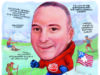
David Taggart, professor of cardiovascular surgery at the University of Oxford (Oxford, UK), a distinguished academic, clinical investigator and cardiac surgeon, died on 9 August 2026.
Colleagues at the John Radcliffe Hospital in Oxford, UK, where Taggart had practiced as consultant cardiothoracic surgeon since 1995, paid tribute to his legacy as “an outstanding surgeon, a supportive colleague and a generous and kind person”.
Taggart qualified in 1981 from Glasgow University (Glasgow, UK) in his native Scotland and was awarded an MD with honours for studies on the effects of hypothermia on the metabolic response to cardiac surgery in 1989. Later he trained as the senior registrar at the Royal Brompton Hospital (London, UK) under Magdi Yacoub and Christopher Lincoln.
After joining the John Radcliffe Hospital in Oxford, Taggart obtained a PhD from Strathclyde for studies of the inflammatory response during cardiac surgery, before his eventual appointment as professor of cardiovascular surgery at the University of Oxford in 2004.
Globally recognised and respected for his research into coronary revascularisation, Taggart led the landmark international randomised Arterial Revascularisation Trial (ART), involving over 3,000 patients, which compared the long-term effectiveness of bilateral versus single internal thoracic artery grafts during coronary artery bypass graft (CABG) surgery. The trial, conducted internationally between 2004 and 2007, found that there were no differences in rates of survival, myocardial infarction (MI) or stroke between the two approaches at one, five or 10 years.
His esteem in the field of coronary surgery saw him appointed lead for cardiothoracic research at the Royal College of Surgeons (RCS) and led to his co-authorship of joint European Society of Cardiology (ESC) and European Association of Cardio-Thoracic Surgery (EACTS) guidelines on the management of myocardial revascularisation, first in 2010, and a further edition in 2014.
Taggart later participated as the surgical chair of the EXCEL trial, a major randomised trial comparing CABG to percutaneous coronary intervention (PCI), famously withdrawing his name as an author on the publication of the five-year outcomes of the trial in the New England Journal of Medicine in 2019 due to a disagreement over the definition of MI used in the trial and the impact that this had on the conclusion.
The fallout from the controversy led EACTS to withdraw support for the 2018 update of the myocardial revascularisation guidelines it had jointly issued with ESC just a year prior.
“David devoted his career to ensuring that surgical practice was guided by the strongest possible evidence. He was a tireless advocate for the benefits of coronary artery bypass grafting for the patients most likely to benefit from it, and he never hesitated to challenge assumptions or question established interpretations,” EACTS secretary general, Patrick Myers (Zurich University Hospitals, Zurich, Switzerland) said in a statement paying tribute to Taggart’s life and legacy in the field of cardiothoracic surgery, also describing him as a longstanding friend and generous contributor to the association. “He also reminded our profession that evidence itself must be examined critically: from the selection of outcome measures to the way data are analysed, presented and openly reported. His intellectual rigour, independence and willingness to ask difficult questions helped elevate scientific debate throughout our specialty.”
As well as his contribution to EACTS, Taggart was actively involved in the wider cardiothoracic surgery and cardiovascular communities, serving as chair of the ESC Cardiovascular Surgery Working Group, and as a member of both the American Association for Thoracic Surgery (AATS) and the Society of Thoracic Surgeons (STS) in the USA.
He was also elected to serve as president of the Society for Cardiothoracic Surgery in Great Britain & Ireland (SCTS) from 2010 to 2012.
“David made an enormous contribution to cardiac surgery in the UK and internationally, particularly through his work on coronary artery bypass surgery and arterial grafting. He combined clinical excellence with academic rigour and rightly spoke up to robustly question practices when he believed the evidence demanded it,” SCTS president Aman S Coonar (Royal Papworth Hospital, Cambridge, UK) and president-elect Enoch Akowuah (Newcastle University, Newcastle, UK) said in a statement.
“David was a major figure within our profession and many of our members will have known him as a colleague, teacher, mentor and friend. His influence on our specialty has been considerable and often inspirational. On behalf of SCTS, we extend our deepest condolences to David’s family, friends and colleagues.”