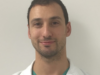
 Bernardo Cortese (Case Western Reserve University, Cleveland, USA) talks to Cardiovascular News about his journey into cardiology, the mentors who shaped his career, and the evolving role of drug-coated balloons (DCBs) in interventional practice. He also reflects on differences between the USA and Europe and key research priorities.
Why did you initially choose to become a doctor, and what was it that made you decide to specialise in cardiology?
In my early life, my biggest mentor was my grandpa, Gino (Luigi). He was a surgeon and a professor, who left an important mark on my life, and was a big reason that I became a physician.
As for becoming a cardiologist, it was through the lessons of Mario Mariani—the head of cardiology at the University of Pisa and one of the most renowned cardiologists in Italy at that time—that I really fell in love with the basic function of the heart and with cardiology itself. He was an incredible orator and had a deep knowledge of cardiovascular pathophysiology. I guess the love for cardiovascular interventions comes from a merging of these important inspirations.
Who were the biggest influences on your early career?
Throughout my career there have been people that have helped to change the direction of my tracks. One was Rita Mariotti, an expert in heart failure who helped shape my cardiology thesis. What I learned from her was how to apply rigorous clinical methodology when you visit a patient, before you decide what instrumentation you have to undergo.
Another mentor was Ugo Limbruno, the head of interventional cardiology in Grosseto, Tuscany. He gave me the opportunity to help out to open a new cath lab starting from zero, and it was a great experience for me to bring all of the people together with him; the technicians, the nurses, and the other young interventional cardiologists. Technically, what he imparted to me was the idea to keep percutaneous coronary intervention (PCI) safe and simple. From a scientific point of view, he knew that I was an imaginative person with a lot of passion for research and new ideas, and he was happy for me to pursue this. I’m trying to bring the same scientific freedom and way of thinking to all the physicians I work with now.
What has been the biggest change in interventional cardiology throughout your career?
In the past 20 years, many things have changed, but there are two that have really changed the way we practise interventional cardiology. The first one is the DCB. Now, we see countries where DCBs are used for more than 60% of revascularisations in the cath lab and physicians using DCBs in 70–80% of cases. This is something that you wouldn’t have predicted in the past, so it is a really big game changer.
The other one we cannot avoid mentioning is transcatheter aortic valve implantation (TAVI), which has completely changed the scenario for aortic disease—from a purely surgical area to allowing treatment in a percutaneous way. In some cases, the patient can be sent home the same or the following day, with a lot of quality and quantity of life being saved because there are less acute complications and also healthcare cost savings.
Of course, this does not completely replace surgery, but if you’re lucky to work in a system where there is a direct dialogue between interventional cardiologists and cardiac surgeons, where you don’t try to pull the patient to your side because you want to do one more procedure, it is a huge improvement.
How did your interest in coronary DCBs come about and what role do you think this therapy will play in the future treatment of coronary artery disease?
I remember reading one of the first papers [on the use of DCBs in coronary disease], a mechanistic study of 50 patients with bare-metal stent in-stent restenosis (ISR). We then became the first group in the world to try to test DCBs in native small coronary vessels by means of a randomised comparison to stents, and we presented our data as a late-breaking trial at EuroPCR in 2009. We then published the PICCOLETO randomised clinical trial in Heart, and that really changed the scenario in many ways. We thought that stents didn’t work well in the small vessel disease setting, which has been proven later on, and we were convinced of that despite the fact that the study failed. But, instead of throwing this idea away, we tried to investigate why this did not work and we learned that, first of all, we didn’t prepare the lesion, lesion preparation was done in only 25% of the cases.
Now we have learned to always prepare the lesion, and we’re doing it with any available tool. The second thing we learned was that that device we were using was probably not a good one. Then, companies and scientists started coming out with a newer generation of devices, and all of these things have led to the fact that the DCB is now considered the best treatment for small vessel disease, as our patient-level ANDROMEDA meta-analysis has shown.
DCBs will be in the mainstream of interventional cardiology for sure. I cannot tell you if there will be more DCBs or stents used in the world, but this is my perception.
You recently moved to the USA from your native Italy. What is the biggest difference in practicing in the USA compared to Europe?
It’s only barely two years since I moved to the USA, so I cannot say I know everything of the two worlds, but what I have learned is that American physicians are ethically very strong; they are committed to their work and they work long hours. In my experience, the burden of bureaucracy is really destroying our category in Europe, but in the USA, the burden is not as high.
On the other hand, I think that in Europe people apply more imagination to their work in the cath lab. A lot of the way of working as an interventional cardiologist in the USA is often about applying protocols, whereas in Europe there is more proactive imagination—every day you face a complex case and you have to put your mind, your energy, your passion into it. All of this makes interventional cardiologists in Europe more prone to adapt new techniques and new technologies.
One other big difference is that in the mid to long term, research is much better funded in the USA and there are clearer pathways for it. Of course, you have to follow rules, you have to adapt, you have to seek grants or industry funding, but there is a lot of commitment, a lot of energy and a lot of economic possibility. In Europe, it’s more related to your passion and finding ways to escape to do good quality research with low costs.
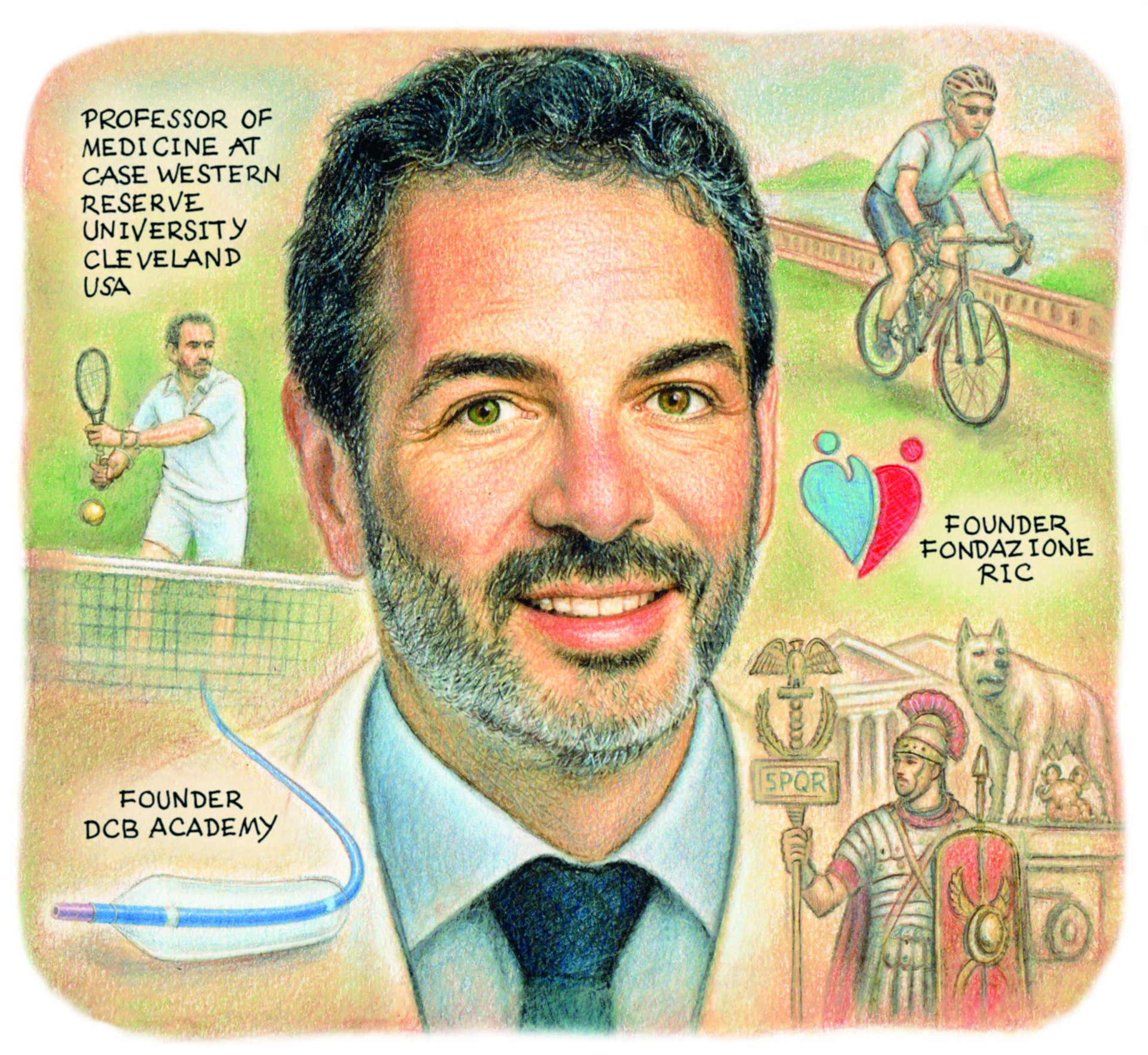
This actually led me to create Fondazione RIC in Milan, with 27 other partners. The main goal of the foundation is to support investigator-driven clinical research through fundraising. We support new ideas if we think that they are sound and they would bring a benefit to patients. We have good channels for fundraising and we use our very strong network and connections across the globe.
Tell us about the DCB Academy–how did the initiative come about and what are its aims?
DCB Academy is an educational and research institution, based not on clinical trials, but on its fellows and members. One of the things I learned from my early career is the importance of mentoring young physicians and nurturing good ideas. This is why in 2021, partly because of COVID-related constraints, I transformed our hands-on, institutional local fellowship programme purely into a research fellowship. We collected fellows from all over the world, creating a research fellowship which is now probably the largest non-institutional, non-society based institution for research in the cardiovascular arena. We have 22 fellows from all over the globe—from Singapore, Korea, USA, Canada, Europe, Middle East, India and Brazil.
Among the 11 trials we are managing, there are two that are very important to us. One is TRANSFORM II, the third big DCB trial after REC-CAGEFREE I and SELUTION DeNovo. This will help us to understand if there is momentum for the DCB in an all-comer de novo lesion population, and if it is non-inferior to stents. The second study is on music therapy and the role of music during cath lab activities. We presented MUS.E I, at TCT last year; MUS.E II is a multicentre study with a dedicated app in 200 patients, and this will tell us with clinically prone endpoints if music therapy may have a role in the cath lab by reducing stress and reducing the need for opiate drugs during PCIs.
Outside of medicine what are your hobbies and interests?
I have several passions that I am lucky to share with my family. One is ancient history, which I read about whenever I have some time and my sons are just as passionate about.
We also practice a lot of sports, especially tennis. I practise often and I have played in several tournaments; who knows, after cardiology, maybe I will become a tennis player! I’m also crazy for fast cars, I change my car every year and I love motorsports.