Results of a pivotal clinical trial evaluating the safety and efficacy of a fully percutaneous transseptal mitral valve replacement (TMVR) procedure—Sapien M3 (Edwards Lifesciences)—in patients with symptomatic, moderate-to-severe mitral regurgitation (MR) who are not eligible for surgery or mitral-transcatheter edge-to-edge repair (M-TEER) procedures, demonstrated effective MR reduction with low rates of complications and mortality.
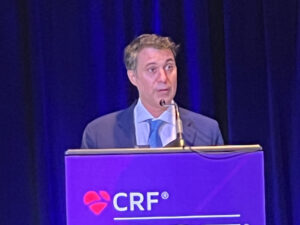
One-year data from the Edwards Lifesciences-funded ENCIRCLE trial, presented by David Daniels (Sutter Health, San Francisco, USA) during a late-breaking trials session at the 2025 Transcatheter Cardiovascular Therapeutics (TCT) conference (25–28 October, San Francisco, USA), simultaneously published in The Lancet, demonstrated low rates of mortality and heart failure hospitalisation for patients treated with the device.
“Percutaneous transseptal TMVR with the Sapien M3 system achieved the primary endpoint with a one-year composite rate of death or heart failure hospitalisation significantly below the performance goal, significant and sustained reduction in mitral regurgitation severity, meaningful and durable improvements in functional status and quality of life, and an observed 30-day mortality markedly lower, one-tenth, than the predicted surgical risk,” Daniels said of the results.
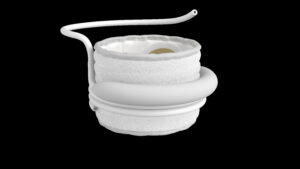
The device, which is fully retrievable, is delivered transfemorally in a two-stage procedure under transoesophageal echocardiogram (TEE) and fluoroscopy guidance.
“Initially we advance a nitinol dock with a hydrophilic sleeve through the medial commissure and three times around the mitral apparatus. This is the base station, this is where we implant the valve—the dock. The sleeve is then removed and we check the adequacy of implantation,” Daniels said of the procedure. “Once we are happy, we release the dock and then we go to the second stage which is to do a balloon-expandable transcatheter heart valve implant that is very similar to a mitral valve-in-valve procedure.”
Trialists screened a total of 1,171 patients at 56 sites in the USA, Canada, Europe, Israel and Australia. Thirty-five percent of those screened were excluded based on anatomic eligibility criteria, with other exclusion criteria including the presence of severe left ventricular (LV) function or dilatation, the potential need for other valvular interventions within the next 12 months, irreversible pulmonary hypertension, severe heart dysfunction or significant renal insufficiency.
Ultimately, 299 patients with mitral regurgitation (MR) ≥3+, New York Heart Association (NYHA) class ≥II, unsuitable for surgery or commercially available transcatheter treatment options due to clinical, anatomic, or technical considerations, were treated. Of these, 287 patients had a valve implanted. Follow up was completed at 30 days, six months and one year.
Baseline characteristics of the study population included an average age of 75.5 years, a risk of mortality for surgical mitral valve replacement of 6.6% based on the Society of Thoracic Surgeons (STS) risk score at 30 days, with 28.8% of patients stratified as high risk based upon STS score.
Daniels noted that 71.2% of patients had moderate-to-severe or severe congestive heart failure symptoms, significantly elevated pro-BNPs, and a 69.9% rate of atrial fibrillation (AF) at baseline.
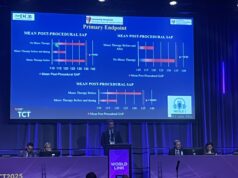
The trial’s primary endpoint, a composite of all-cause mortality and rehospitalisation for heart failure at one year, stood at 25.2%, compared to a prespecified performance goal of 45%. All-cause death and heart failure hospitalisation rates were 13.9% and 16.7%, respectively.
Prespecified secondary endpoints included improvement in MR grade, NYHA class, Kansas City Cardiomyopathy Questionnaire overall score (KCCQ-OS), and Left Ventricular End Diastolic Volume index (LVEDVi).
The study found that all patients had an improvement in MR grade with more than 95% of patients having ≤1+ total MR at 30 days and one year. NYHA improvement was observed in 73.4% of patients at one year, and ~88% of patients were considered as having NYHA class I or II at one year.
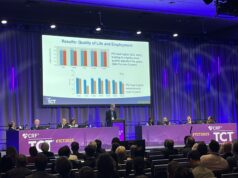
The improvement in KCCQ-OS was 18.4±1.68 with ~43% of patients having ≥20-point score improvement at one year. Rates of stroke, clinically significant leaflet thrombosis, and haemolysis were 9.3%, 6.7%, and 7.1%, respectively at one year.
“No comparative group was directly available for this patient population, and the performance goal was derived in consultation with FDA [US Food and Drug Administration] and based on event rates from optimised medical therapy arms of randomised controlled trials that were investigating M-TEER intervention available at the time that this trial designed,” Daniels said of the design of the study’s endpoint.
Daniels added: “These findings will help guide clinical practice by providing an alternative treatment option for patients who are not suitable for conventional surgery or TEER procedures.”