Long-term follow-up data from the PARTNER 3 trial, a major randomised trial of management of severe, symptomatic aortic stenosis in patients at low risk for surgery, highlight comparable durability between transcatheter aortic valve implantation (TAVI) and surgical aortic valve replacement (SAVR) at seven years.
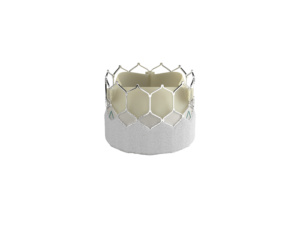
The trial randomised 1,000 patients with severe symptomatic aortic stenosis between March 2016 and October 2017 to undergo TAVI using the Sapien 3 (Edwards Lifesciences) balloon-expandable valve (n=503) or surgery (n=497) for severe aortic stenosis.
Presenting the trial’s seven-year durability data at the 2026 New York Valves conference (24–26 June, New York, USA), Philippe Pibarot (Quebec Heart and Lung Institute, Quebec, Canada) commented that bioprosthetic valve durability has become increasingly important as younger and lower risk patients are considered for the therapy.
Close to 90% of patients enrolled in the trial were available for follow-up at seven years, with investigators looking at a host of outcomes related to the durability of the two treatment approaches including stage 2 or 3 bioprosthetic valve dysfunction (BVD) related to structural valve deterioration (SVD), thrombosis, or endocarditis; all-cause bioprosthetic valve failure (BVF); BVF related to structural valve deterioration (SVD); and aortic valve reintervention.
Rates of SVD were similar between the two arms, Pibarot reported, standing at 7.3% in the TAVI group and 7.6% in the SAVR group. BVD related to thrombosis occurred more frequently in the TAVI (5.2%) than the SAVR arm (0.9%), he noted, detailing that most cases occurred within the first three years, and typically resolved spontaneously or with anticoagulation.
Similar rates of SVD (7.3% for TAVI and 7.6% for SAVR) were observed in both arms, and combined analysis of both cohorts looking at the association of SVD with clinical outcomes demonstrated that SVD was associated with increased risk of all-cause mortality and strongly associated with an increased risk of aortic valve reintervention. Multivariate analysis showed an association between the presence of small aortic annulus (≤430mm2) and an increased risk of SVD. However, severe prosthesis patient mismatch (PPM) and high residual gradients at 30 days, which are more common in small annuli, were not associated with SVD. Importantly, he said, there was no significant treatment interaction for small annuli or other factors including age or diabetes mellitus.
Turning to valve failure, Pibarot reported that there were low and similar rates of BVF (6.9% for TAVI vs. 7.5% for SAVR) at seven years. Looking in more granular detail at BVF by aetiology, Pibarot noted that the rate of BVF related to SVD was numerically lower in the TAVI arm versus the surgical arm (3.9% vs. 5.3%).
Presence of small annulus was found to be associated with increased risk of BVF, as well as the presence of mild or greater total aortic regurgitation (AR) at 30 days in multivariate analysis. There was no significant interaction with the small annulus or mild or greater total AR at 30 days after treatment, Pibarot detailed.
On valve-related reintervention, the presenter noted that the cumulative incidence of valve-related intervention was similar between the two groups, 5.4% in the TAVI arm and 5.5% in the SAVR arm.
“The most frequent cause by far in both arms was progressive bioprosthetic valve stenosis,” Pibarot detailed, adding that there was only one patient requiring re-intervention because of acute transvalvular AR and this patient was in the SAVR arm. These findings contrast with those of the six-to-seven-year analysis of the EVOLULT-Low Risk trial that reported higher incidence of reinterventions in the TAVI arm compared to the SAVR arm, and the majority of the reinterventions were related to acute transvalvular aortic regurgitation.
Roughly 70% of reinterventions were performed on an elective basis, he noted, with 30-day mortality after reintervention at 0% in the TAVI arm and 4.4% in the SAVR arm.
“In the largest randomised core-lab adjudicated seven-year follow-up of low-risk patients with symptomatic severe aortic stenosis undergoing aortic valve replacement, TAVI and surgery demonstrate similar rates of structural valve deterioration and bioprosthetic valve failure with low overall event rates,” Pibarot said in his concluding remarks. “SVD was associated with higher risk of reintervention and all-cause mortality. Thrombosis-related BVD was more frequent with TAVI but occurred early, was often reversible, and very rarely progressed to failure or reintervention.”
The data demonstrate that TAVI with the Sapien 3 platform has comparable seven-year durability to surgery, he said, supporting its use as a treatment option in lifetime management of low-risk patients with symptomatic severe aortic stenosis.
Findings of the analysis were also published in JAMA Cardiology.