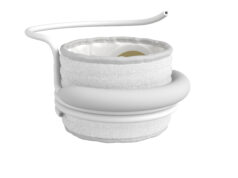
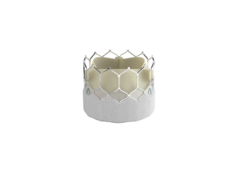
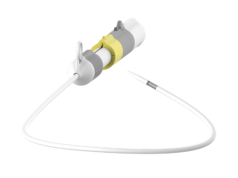
Early registry data shared at the 2026 New York Valves meeting (24–26 June, New York, USA) demonstrate the real-world safety and efficacy of the Triclip (Abbott) transcatheter edge-to-edge repair (TEER) system for the treatment of severe tricuspid regurgitation (TR), investigators have reported.
Wayne Batchelor (Inova Health System, Fairfax, USA) presented 30-day outcomes of tricuspid-TEER with Triclip from the Society for Thoracic Surgery (STS) and the American College of Cardiology (ACC) TVT registry in a late-breaking clinical science presentation at the meeting. The data chart the first US commercial experience with the device, collected from 278 sites, and comprising more than 3,000 patients with TEER procedures performed after the US Food and Drug Administration (FDA) approval of Triclip in April 2024, running up to September 2025.
To date, the Triclip device has been tested in two randomised trials—TRILUMINATE and Tri.Fr—each comparing the device to medical therapy in patients with severe TR at intermediate or greater risk for surgery.
“These trials have demonstrated favourable safety, reductions in TR and recurrent heart failure hospitalisations versus guideline medical therapy, and clinically meaningful improvements in quality of life,” Batchelor commented at New York Valves, acknowledging that there are few reports of the device’s outcomes in a real-world setting.
In his New York Valves presentation, Batchelor compared the baseline characteristics of the patients treated and documented in the TVT registry, with those randomised in the TRILUMINATE pivotal trial. The age (78 years), proportion of female patients (59%) and prevalence of atrial fibrillation (84% in TVT registry and 83% in TRILUMINATE) were consistent between the two studies, but TVT patients more commonly had been hospitalised for heart failure in the prior year (50% vs. 25%) and had a lower left ventricular ejection fraction (55% vs. 59%).
“It’s important to note that in the registry, as this device permeated the clinical real world, these were probably slightly sicker patients, with 50% of them—double that of the TRILUMINATE trial—having had a hospitalisation for heart failure in the prior year,” Batchelor said of the comparative characteristics of the two groups.
On the procedural details, Batchelor reported that sites performed a median of seven TEER procedures with the device, with a 98% success rate achieved overall. Patients had a median length of stay of one day following their procedure, and 96% were discharged to home.
Batchelor described safety outcomes as “excellent”, reporting all-cause mortality at 1.4%, cardiovascular death at 0.8%, and heart failure hospitalisation in 2.3% of cases at 30 days. Rates of major bleeding, reintervention, permanent pacemaker implantation, stroke, endocarditis, and myocardial infarction were low—all at less than 1%. These were compared against the corresponding figures in the TRILUMINATE pivotal trial, in which rates of single-leaflet device attachment (SLDA) and major bleeding were significantly higher (5.6% and 3.2% respectively).
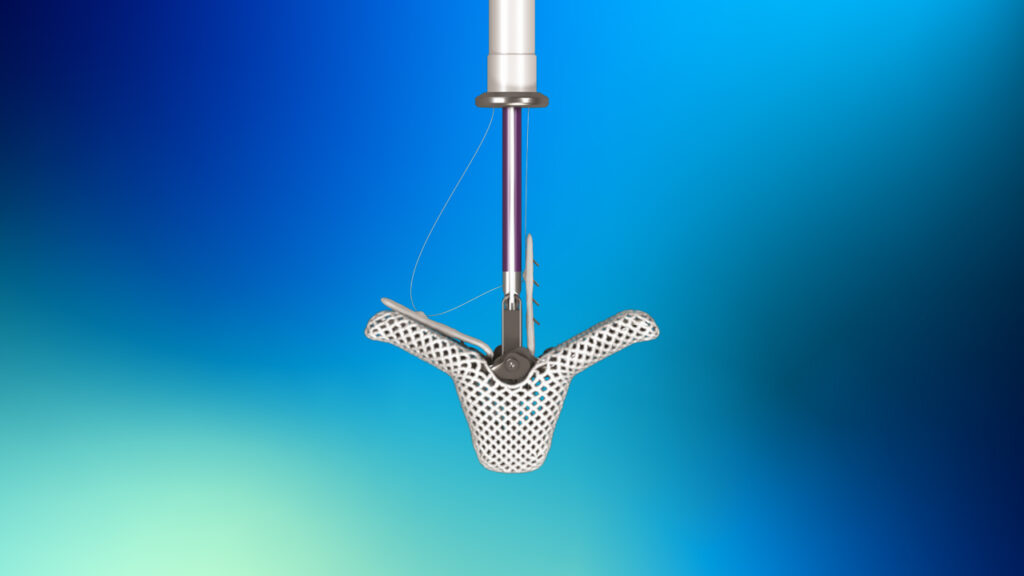
Looking at the effectiveness of the procedure in reducing TR, 96% of patients had severe TR at baseline, whereas at 30 days following the procedure, 87% of patients had moderate or less TR—similar to improvements seen in the pivotal trial. “I would note the TRILUMINATE pivotal [trial] had an independent core lab adjudicating it, but [these are] very similar results,” caveated Batchelor.
On quality of life and functional capacity measures Triclip also performed well, with a mean improvement in Kansas City Cardiomyopathy Questionnaire (KCCQ) score of 22 points compared to baseline, and more than 80% of patients in New York Heart Association (NYHA) class 1 or 2 at 30 days compared to 29% at baseline.
Batchelor acknowledged that the study was limited by the fact that echocardiographic and clinical data were site-reported without independent core lab adjudication, and that only short-term outcomes were available.
“These results provide generalisability for the randomised clinical trial findings from two major trials and support Triclip as an effective therapy for anatomically suitable patients with severe symptomatic tricuspid regurgitation,” he concluded.