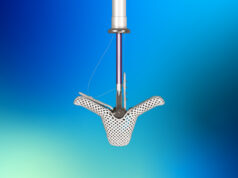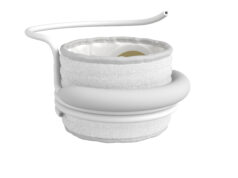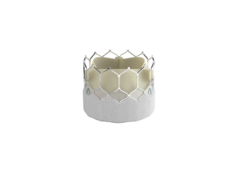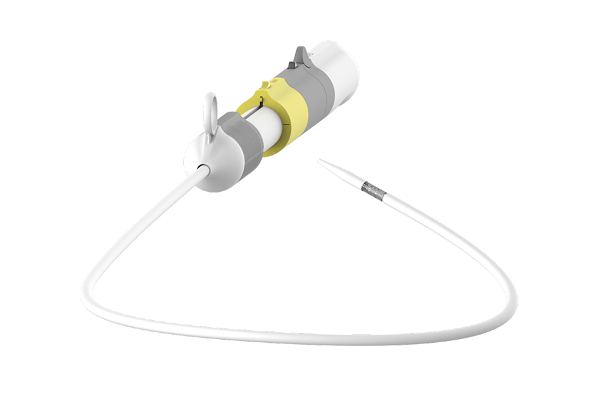
Favourable outcomes were seen at one year among patients with symptomatic severe aortic regurgitation (AR) treated using the investigational J-Valve transfemoral system (JC Medical), new data presented at New York Valves (24–26 June, New York, USA) and published in the Journal of the Society for Cardiovascular Angiography & Interventions (JSCAI) have shown.
The J-Valve early feasibility study evaluated the safety and effectiveness of the transfemoral transcatheter aortic valve system in patients with severe native AR who were deemed high risk for surgical aortic valve replacement.
Though surgical aortic valve replacement remains the guideline-recommended therapy for many patients with severe AR, treatment options are limited for patients who are older or have other factors that make surgery more complex.
“Severe native aortic regurgitation is a difficult disease to treat with transcatheter therapy. However, this early feasibility study for J-Valve is encouraging because it shows that a dedicated device designed for AR can achieve sustained valve performance, meaningful symptom improvement, and evidence of reverse left ventricular remodelling at one year,” said first author Dean J Kereiakes (The Christ Hospital Heart and Vascular Institute, Cincinnati, USA). “While larger studies are needed, these data support continued evaluation of the J-Valve system as a potential option for patients with severe AR and limited alternatives.”
The prospective, single-arm, multicentre early feasibility study enrolled 25 patients at eight US centres. Participants had a mean age of 80.6 years, all had symptomatic severe native AR, and all were deemed high risk for surgical aortic valve replacement by a local multidisciplinary heart team.
Successful valve implantation occurred in 92% of patients. The primary endpoint, a composite of all-cause mortality or disabling stroke at 30 days, occurred in two patients (8%). All-cause mortality was 4% at 30 days and one year, with no cardiovascular-related deaths.
Patients experienced sustained improvements in symptoms and health status. At one year, their New York Heart Association (NYHA) functional class improved in 72.7% of patients, with 95.5% in class I or II. Reverse left ventricular remodelling was evident at 30 days and sustained through one year. Continued follow-up through five years is planned, and more definitive evidence is expected from the larger ongoing JOURNEY trial.
The J-Valve trial was funded by JC Medical, an affiliate of Edwards Lifesciences.