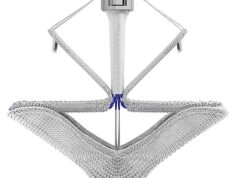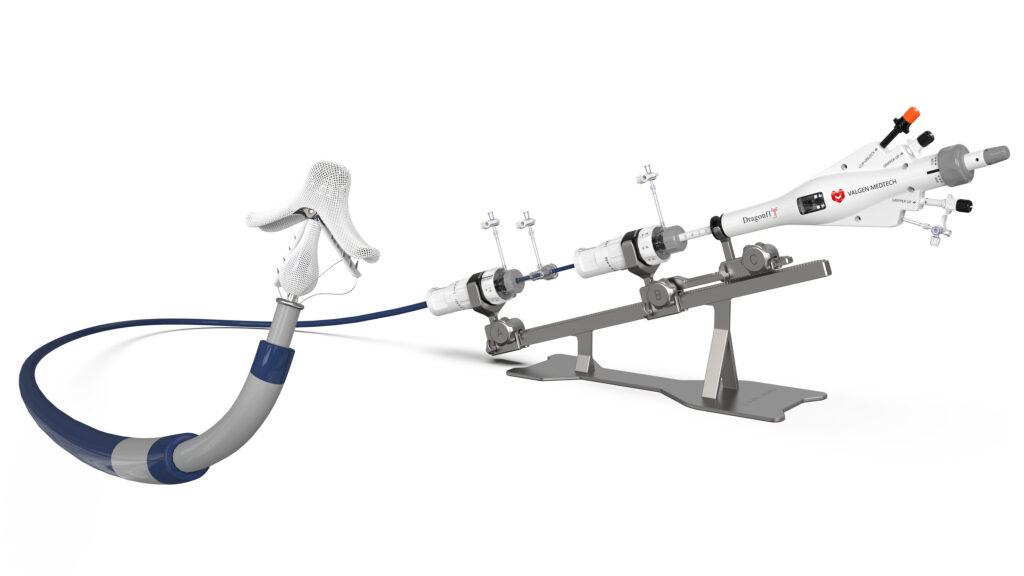
Valgen Medtech has announced that its proprietary DragonFly transcatheter mitral valve repair (TMVr) system has received CE mark approval in the European Union (EU) for the treatment of functional mitral regurgitation (FMR).
Following its EU approval for degenerative mitral regurgitation (DMR) in April 2025, this latest authorisation positions the DragonFly system as the first transcatheter mitral valve repair device originating in China to receive EU approval for both DMR and FMR indications.
FMR, which commonly occurs in patients with heart failure, remains a particularly complex condition to manage in clinical practice.
In recent years, a growing international consensus has emerged regarding optimal treatment strategies for FMR, including 2025 guidelines from the European Society of Cardiology (ESC) and the European Association for Cardio-Thoracic Surgery (EACTS), upgrading transcatheter edge-to-edge repair (TEER) for the treatment of selected patients with ventricular FMR (vFMR) to a class I recommendation.
In April 2026, the Asia Pacific Society of Cardiology (APSC) published a consensus statement in JACC: Asia, providing a standardised treatment pathway and long-term management strategy for symptomatic patients with moderate-to-severe or more advanced FMR who are candidates for TEER therapy.
The DragonFly system is supported by evidence generated through a series of multicentre studies across Asia, Europe, and other international regions, including the DragonFly-DMR, DragonFly-FMR, and DragonFly-EU pivotal trials.
One-year follow-up results from the DragonFly–DMR EU pivotal study, presented by Valgen Medtech at CSI Frankfurt 2026 (3–6 June, Frankfurt, Germany), demonstrated favourable safety, durability, and clinical performance in elderly patients with severe DMR who were at high surgical risk including sustained MR reduction at one-year follow-up, with 100% of patients maintaining MR severity at ≤2+ (moderate or less).
The composite primary effectiveness endpoint at one year—defined as freedom from all-cause mortality, mitral valve reintervention, and MR >2+—was achieved in 86.7% of patients, whilst the device implantation success rate and procedural success rate reached 97.4%, with 66.7% of patients requiring a single clip.
By 30 days post-procedure, 100% of patients had improved to New York Heart Association (NYHA) class I or II and maintained these outcomes through one year of follow-up. The findings also demonstrated favourable cardiac reverse remodelling.
To date, DragonFly has received regulatory approvals in 15 countries and regions, with routine clinical use and commercial adoption already underway in key international markets including Latin America and Southeast Asia.