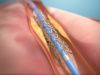
Ancora Heart has announced that two-year results from an analysis of early clinical studies evaluating the AccuCinch transcatheter left ventricular (LV) restoration system have been published in the journal Structural Heart.
The findings demonstrate that reverse remodelling achieved with the AccuCinch system was sustained through two years, along with improvements in heart function, quality of life, and reduced heart failure hospitalisations.
“Reverse remodelling is usually associated with reduced heart failure events and mortality,” said Daniel Burkhoff, director, Heart Failure, Hemodynamics and MCS Research at the Cardiovascular Research Foundation. “From a clinical perspective, the fact that reverse remodelling is maintained at two years is particularly meaningful.”
These findings build on previously reported 12-month data, which were presented at the 2023 Technology and Heart Failure Therapeutics (THT) conference and simultaneously published in the Journal of Cardiac Failure. Patients included in the analysis matched key inclusion criteria (LVEF 20–40%, MR ≤ 2+) of the ongoing CORCINCH-HF pivotal trial.
“These two-year data reinforce that the AccuCinch system has the potential to deliver meaningful and sustained reverse remodelling of the heart,” said Jeff Closs, president & chief executive officer of Ancora Heart. “We are excited to build on this research in our ongoing CORCINCH-HF pivotal trial designed to evaluate the safety and effectiveness of AccuCinch. With the first 250 enrolled patients nearing completion of their six-month follow-up assessments that will be the basis for our PMA submission, we are making important progress toward bringing this therapy to more patients.”
The analysis evaluated clinical outcomes from 51 symptomatic heart failure with reduced ejection fraction (HFrEF) patients from multiple sites in the USA and Europe. Key outcomes include sustained reverse remodelling with a mean decrease in left ventrical (LV) end-diastolic volume of 30.0±38.8 mL (p<0.001) and an increase in ejection fraction of 5.4±9% (mean ± SD; p<0.001).
Improvements were also seen in functional status and symptoms, including a median 19.5-point increase in Kansas City Cardiomyopathy Questionnaire (KCCQ) score (p<0.001), improvement by at least one New York Heart Association (NYHA) class in 60% of patients, and 98% either improved or remained stable. The rate of heart failure hospitalisation two years following implant was significantly reduced compared to the year prior to the implant (p<0.001).
The CORCINCH-HF pivotal trial will enrol 400 patients. The study recently achieved its first enrolment milestone of 250 randomised patients, with six-month follow-up data from that cohort to support the company’s planned premarket approval (PMA) submission to the US Food and Drug Administration (FDA). The FDA previously granted the AccuCinch System breakthrough device designation.