Elucid has announced first patient enrolment in AI-PREDICT, a retrospective, international, multicentre study designed to establish a new lesion-centric paradigm for cardiovascular risk stratification.
Enrolment is underway at three of more than 20 planned sites across the USA, Europe, and Asia: Emory University (Atlanta, USA), the Medical University of South Carolina (Charleston, USA), and Centro Cardiologico Monzino (Milan, Italy), led by site principal investigators Carlo N De Cecco, Akos Varga-Szemes and Gianluca Pontone, respectively.
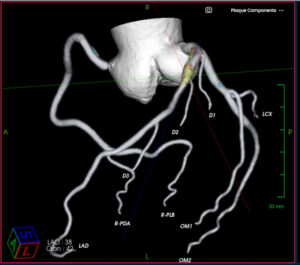
AI-PREDICT will enrol approximately 1,000 subjects, including both patients who experienced a myocardial infarction (MI) within 36 months of a baseline coronary CT angiography (CCTA) and clinically matched, event-free controls, generating a dataset of individual coronary lesions. All scans will be analysed by a central core lab, blinded to outcomes, using Elucid’s Plaque-IQ and FFR-CT1 software to measure key morphological, anatomical and physiological features.
“We joined AI-PREDICT early because it asks the question: among the many plaques in a patient, which features distinguish the one plaque that causes harm from the many that don’t? This study expects to extract that detail lesion by lesion, which is why we wanted to be part of AI-PREDICT,” said Pontone.
Many heart attacks arise from plaques that progressed silently, in the moderate stenosis range, producing no symptoms before causing the problem, Elucid says in a press release. The AI-PREDICT study is designed to better identify and stratify those lesions in advance.
AI-PREDICT’s principal investigator is Jagat Narula (University of Texas Health Science Center, Houston, USA) with De Cecco serving as co-principal investigator. The study’s Steering Committee is co-chaired by Amir Ahmadi (Icahn School of Medicine at Mount Sinai, New York, USA) and lead scientific advisor at Elucid, and Michael Hadley (Northwell Health, New York, USA), a leading expert in cardiac CT and its clinical applications.
“AI-PREDICT represents a fundamental shift in how we think about cardiovascular risk,” says Narula. “For too long, we have assessed risk at the population level while heart attacks happen at the lesion level. This study is designed to take a step towards closing that gap.”
Ahmadi adds: “By comparing culprit lesions and non-culprit bystander lesions in the same MI patient, and stable lesions in matched controls, we will, for the first time, have a rigorous, large-scale framework for understanding risk at a lesion level. This could be key in guiding personalised CAD [coronary artery disease] prevention.”