This advertorial is sponsored by Medtronic
As transcatheter aortic valve implantation (TAVI) moves into younger, lower-risk populations, the focus is shifting from procedural success to long-term strategy. Lifetime management is now central to decision-making. Against this backdrop, device selection is paramount, with platforms such as Evolut™ (Medtronic) increasingly discussed for their long-term durability, alongside the potential to support future reintervention, coronary access and leaflet modification strategies.
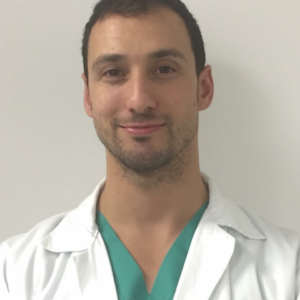
“When we first started TAVI, it was a therapy that was dedicated as almost palliative for patients that were at the end of their lives; so durability of these devices was not much of a concern, and what we did afterwards was not really planned,” Ignacio Amat-Santos (Hospital Clínico Universitario de Valladolid, Valladolid, Spain) tells Cardiovascular News. Today, the paradigm has shifted. Recent data underscore confidence that TAVI is a suitable strategy in younger, lower-risk patients.
This was first demonstrated in the NOTION trial which, at 10 years, demonstrated that TAVI with the predecessor to Evolut, CoreValve™ (Medtronic), has similarly low reintervention rates as seen with surgical aortic valve replacement (SAVR)—4.3% vs. 2.2% (p=0.3), whilst more current, real-world data from the Transcatheter Valve Therapy (TVT) registry, presented at the 2026 Cardiovascular Research Technologies (CRT) conference (7-10 March, Washington, DC, USA) by Robert Yeh (Beth Israel Deaconess Medical Center, Boston, USA ) have shown reassuringly low reintervention rates in low-risk patients (3.3% at six years for Evolut R, 2% at five years for Evolut PRO, and 1% at 4 years for Evolut PRO+). This is why lifetime management has become an important facet of any successful plan for treating aortic disease—not just considering the immediate term but also looking ahead to any future interventions that a patient may require.
“Lifetime management is the expression that we use to try to explain what we can do during TAVI procedures to make sure these patients can undergo future intervention,” explains Amat-Santos. “Firstly, that the first intervention lasts as long as possible, and secondly, that if the patient needs a second or a third intervention, this can be done with minimal risk.”
Redo TAVI procedures—or so-called TAV-in-TAV procedures—have become an increasing part of the caseload for interventional cardiologists, as patients return to the cath lab once their original valve has begun to reach the end of its working life. For Amat-Santos, dealing with these cases offers a number of key learnings, not only in achieving success in the redo procedure, but in planning for success at the point that the index valve is chosen and implanted.
“The redo TAVI procedures that we are seeing now are performed over those devices where we were not planning a second or third procedure,” he explains. “It’s not lifetime management; now it’s just problem solving, and the approach is different to what we are talking about when we discuss lifetime management. We have to deal with several issues like poor commissural alignment of the first device, suboptimal height of implantation, [or] suboptimal pre- or post-dilation.”
In practice, operators are now faced with the reality that device choice should not solely factor in the immediate procedural success.
“We have to offer our patients a device that allows the best effective orifice area with the lowest risk of paravalvular leak,” Amat-Santos states, stressing the importance of good haemodynamics in shaping which valve interventionalists may wish to reach for as their ideal choice of index valve. “Immediately after that, the next priority is adequate commissural or coronary alignment, so that if valve degeneration occurs, we still can modify the leaflets.”
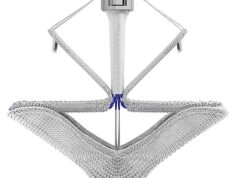
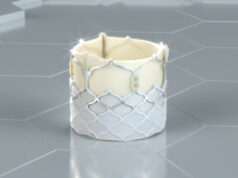
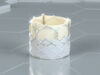
Aligning the commissures during TAVI procedures is a key factor for easier future coronary access, improved coronary blood flow and valve haemodynamic performance, and may facilitate redo-TAVI in the future. The Evolut system facilitates this using gold markers built into the frame to facilitate visualisation of implant depth and valve commissure location during the procedure.
Latest generations of the Evolut platform also offer three larger coronary access windows through a modified diamond-shaped cell design, which provides increased space for catheter manoeuvrability to facilitate future access to coronary arteries of varying patient anatomies, whilst also designed to maintain its structural strength and radial force.
“With the Evolut platform we can quite easily perform conventional alignment,” comments Amat-Santos, who adds that with any supra-annular valve, commissural and coronary alignment become increasingly important, as the only way to prevent the “neo-skirt” from occluding coronary ostia when a second device is implanted is to use leaflet modification.
Leaflet modification techniques and technologies are now also emerging as important tools for preserving future coronary access, something that Amat-Santos describes as being essential to modern-day TAVI practice. “Leaflet modification, from my point of view, is a must for a centre that wants to perform TAVI at the highest level,” he comments. “Many younger patients will come with a deteriorated SAVR [surgical aortic valve replacement] or deteriorated TAVI. In both of those settings, leaflet modification is as needed as intravascular imaging or plaque modification in the coronaries if we’re going to have a good result. We can still perform TAVI without using it, but we are compromising the life expectancy and even procedural safety,” he says.
Dedicated leaflet modification technologies—such as the ShortCut (Pi-Cardia) leaflet splitting device—are still some way from entering everyday practice, but Amat-Santos says that techniques such as BASILICA, which uses catheters and guidewires to first traverse, then lacerate, the aortic leaflet, can be easily reproducible.
“Of course, it requires dedicated training to know how to do it, but there are several resources to train on that, and this is the strategy that we are following. I would say that sometimes these strategies are perceived as too complex or increasing the risk of the intervention, but I think it’s just a lack of proper training,” he comments.
Unlike device-based therapies, technique-driven procedures rely heavily on operator experience and knowledge dissemination. “As physicians and educators, we have to be able to spread the knowledge on how to do this, because really it completely changes outcomes for patients,” he says, adding that the benefits are clear. “We have a long series of patients already with this strategy and it’s safe. It does not increase the procedural risk, and once you have done the first five or six cases, the procedural duration is not significantly increased—it might take 15 or 20 minutes longer, but it’s feasible,” he says.
For Amat-Santos, the message is straightforward: “I would encourage all my colleagues who are doing TAVI to make an effort to learn these techniques.”