Results of a subanalysis of the SELUTION DeNovo trial point towards a potential clinical benefit of a drug-eluting balloon (DEB)-based percutaneous coronary intervention (PCI) strategy in patients at high bleeding risk.
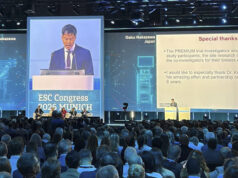
Tuomas Rissanen (North Karelia Central Hospital, Joensuu, Finland) presented the outcomes of a prespecified analysis from the trial in a late-breaking science session at the European Society of Cardiology (ESC) 2026 congress (28–31 August, Munich, Germany). He reported that though the difference in the primary endpoint rate of target vessel failure (TVF) was not statistically significantly different between the two approaches, the findings could warrant a more thorough comparison in high-bleeding risk patients.
SELUTION DeNovo is a prospective, randomised, open-label, multicentre trial, comparing a DCB treatment strategy with the Selution SLR drug-eluting balloon (DEB) to a systematic DES strategy amongst a broad, all-comers population with de novo coronary lesions between 2–5mm, acknowledged as the largest randomised trial to date using DCBs in coronary artery disease.
Presented late in 2025, the trial’s on-year primary endpoint of target vessel failure (TVF)—comprising cardiac death, target-vessel myocardial infarction (MI), or clinically driven target vessel revascularisation—occurred in 5.3% of patients in the DEB strategy group and 4.4% of the DES strategy group, meeting non-inferiority criteria.
In the high-bleeding risk subgroup data presented by Rissanen at ESC 2026 rates of TVF stood at 7.9% in the DES arm and 4.9% in the Selution DEB arm.
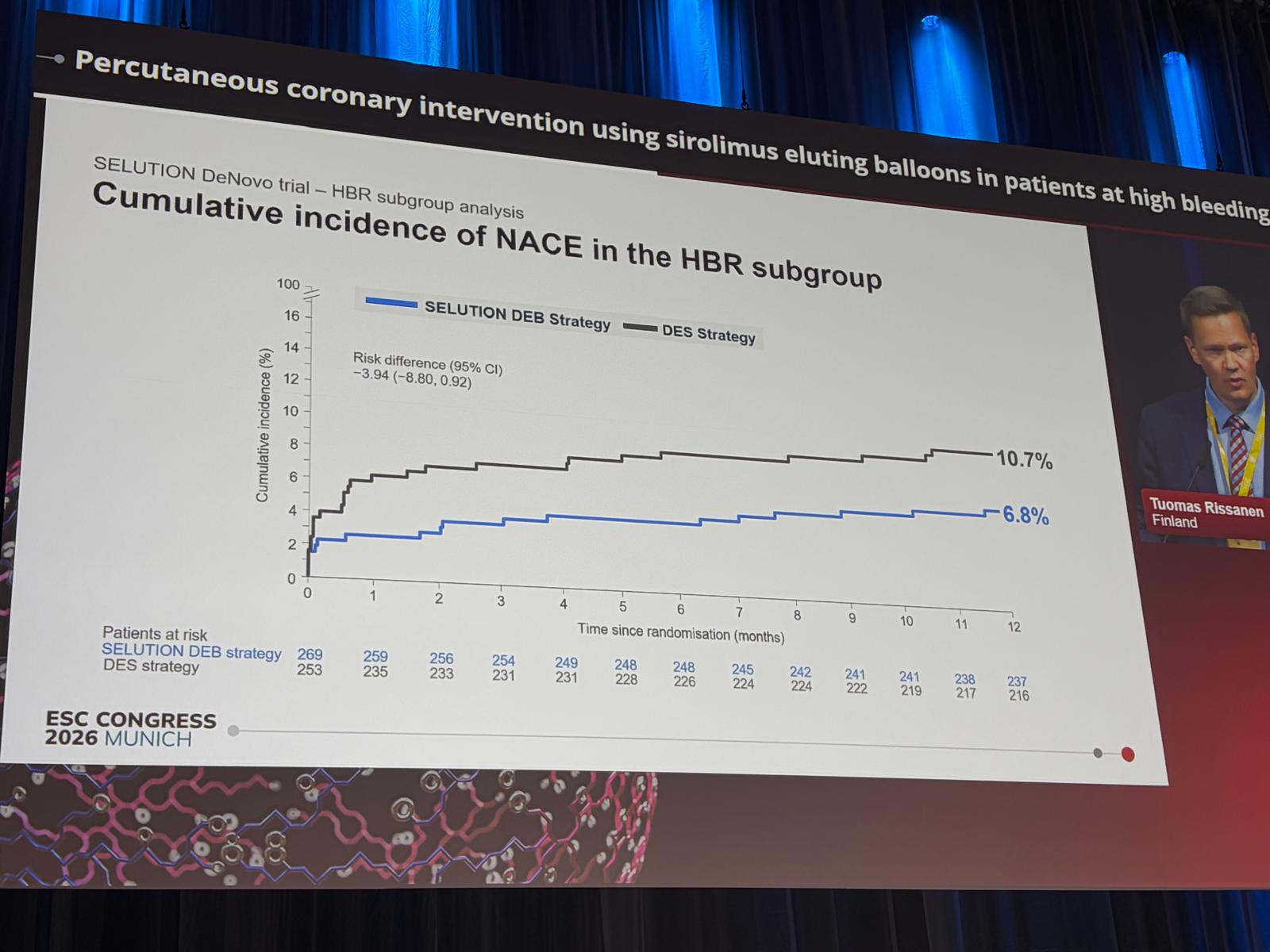
“The confidence interval crossed zero, and therefore this difference is not statistically conclusive, but suggests possible clinical benefit of the solution DEB strategy over stenting in high bleeding risk patients,” Rissanen said.
Supporters of a DCB-based approach have suggested that this strategy may be of benefit in high bleeding risk patients by enabling a shorter duration of dual antiplatelet therapy (DAPT) compared with the use of DES and reducing thrombotic risk due to the absence of a permanent implant.
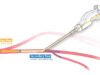
The Selution SLR balloon is designed with sirolimus-containing microreservoirs embedded in a biodegradable polymer and phospholipid coating, intended to provide sustained release of sirolimus over a period of 90 days, resembling the pharmacokinetics of a DES.
Of the more than 3,000 patients enrolled in SELUTION DeNovo, 17% fulfilled Academic Research Consortium high bleeding risk criteria making them eligible for the subgroup analysis. The two randomised groups were well balanced, Rissanen detailed, with a mean age of around 72 years. Nearly a third of patients had diabetes, whilst a third also presented with acute coronary syndrome (ACS) or had previous PCI. Bleeding risk, as demonstrated by the ARC high bleeding risk score, was similar between both groups.
The treatment groups were also well balanced in terms of the distribution of high bleeding risk criteria, Rissanen said, noting that of these, two-thirds of the patients were taking anticoagulants, almost half were at least 75 years old, and renal impairment and previous stroke were prevalent.
As part of the trial’s design, operators were given the option to perform provisional stenting if needed for high-risk dissection or residual stenosis. Bailout stenting was required in 17% of high bleeding risk patients in the DEB arm, meaning that 83% avoided permanent coronary implants.
On secondary outcomes, Rissanen reported that major bleeding occurred in 2.3% of DEB strategy patients and 3.2% of DES strategy patients, an absolute difference of approximately 1 percentage point between the two groups whilst net adverse clinical events (NACE) occurred in 6.8% of DEB strategy patients and 10.7% of DES strategy patients. Rissanen described this difference as “not statistically significant but clinically intriguing”.
Antiplatelet therapy was not protocol mandated or randomised, but the treatment was less intensive and shorter in the Selution DEB arm as compared to stenting, with the complete discontinuation of all antiplatelet therapy more frequent in the DEB arm at one and six months. Fewer patients were on dual antiplatelet therapy at six months in the balloon arm.
Some limitations to the study were noted, including that only 17% of the main trial population met the high bleeding risk criteria, suggesting a bias in the patient selection and that the analysis was not powered to demonstrate any differences in clinical outcomes.
“The Selution DEB-based strategy is associated with numerically lower rates of target vessel failure, major bleeding, and net clinical adverse events at one year,” Rissanen said in his concluding remarks. “The less intensive antiplatelet therapy in the DEB arm did not cause excessive risk of MI [myocardial infarction] or acute vessel thrombosis. The SELUTION DeNovo trial is ongoing, and the five-year results will be very important to demonstrate possible long-term benefits of the balloon-based strategy.
“These results warrant an adequately-sized and powered controlled trial assessing drug-eluting balloons and drug-eluting stents in patients at high bleeding risk.”
Results of the analysis were published simultaneously in EuroIntervention.