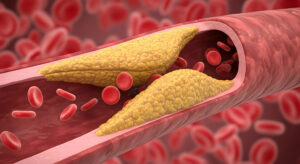
 Having more modifiable risk factors such as elevated blood pressure, cholesterol, diabetes or smoking, is associated with greater coronary plaque burden and vulnerability in patients with coronary artery disease, new research using analysis of three-vessel optical coherence tomography (OCT) imaging has shown.
Detailing their study in JACC: Advances, Jakub Chmiel (Harvard Medical School, Boston, USA) and colleagues write that they sought to shed light on any association between the presence of cardiovascular risk factors and pan-coronary plaque burden, plaque phenotype and features of vulnerability. As well as modifiable risk factors, the team also studied any potential link with modifiable risk factors such as age, sex and family history of coronary artery disease.
Using the Massachusetts General Hospital OCT registry, Chmiel and colleagues analysed 534 plaques in 131 patients who underwent OCT imaging of all three major epicardial coronary arteries, finding that patients with more risk factors had more plaques across all three coronary arteries.
Additionally, Chmiel and colleagues report that a greater number of modifiable risk factors was associated with fewer stable plaques and more prevalent vulnerable plaque features such as lipid plaques with thin fibrous caps that are susceptible to disruption, whereas non-modifiable risk factors were associated with more stable plaque phenotypes.
“The higher the number of vulnerable, or rupture-prone plaques, the greater the chance that one of them will trigger an adverse event,” said senior author Ik-Kyung Jang (Massachusetts General Hospital, Boston, USA). “Our findings highlight the importance of early, intensive and sustained interventions to control the modifiable risk factors and prevent future events.”
Cardiovascular risk factors are well established predictors of adverse events, the study team writes in their JACC: Advances paper, noting that current guidelines emphasise modifiable risk factors may be primary targets for cardiovascular disease prevention. Increased plaque vulnerability in patients with multiple risk factors may explain poor outcomes, but the association has not been fully elucidated, they add.
Through their study, the researchers selected registry patients who had no prior history of percutaneous coronary intervention (PCI), with OCT images analysed at a core lab. Patients had a median age of 62 years, 72.5% were male, and 36.6% had acute coronary syndromes.
Findings of the analysis “further strengthen the rationale for early, intensive and sustained control of modifiable risk factors to mitigate future coronary events”, the study team writes.