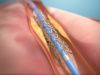
 CryoTherapeutics has announced the successful treatment of the first patient in its ICECAP clinical trial, assessing the use of its minimally invasive, localised cryotherapy for the treatment of coronary artery disease.
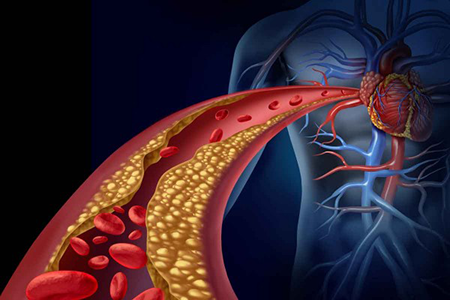
The milestone marks an important step in evaluating whether localised cryotherapy can help stabilise vulnerable coronary plaques before they lead to myocardial infarction (MI), the company says in a press release.
The ICECAP study is designed to evaluate the efficacy and safety of localised cryotherapy applied to non-obstructive, high-risk coronary plaques identified through a multimodal imaging strategy combining non-invasive and invasive technologies, while also assessing changes in fibroatheroma cap thickness over time.
Patients are screened using coronary computed tomography (CT) imaging and artificial intelligence (AI)-enabled plaque characterisation tools to identify high-risk plaque features.
During the procedure, intravascular imaging, including near-infrared spectroscopy (NIRS) and optical coherence tomography (DeepOCT), is used to further confirm high-risk plaque morphology and guide treatment. Follow-up imaging will assess biological response to cryotherapy over time.
During ICECAP screening, the first patient with stable angina was identified as having a non-obstructive high-risk coronary plaque.
ICECAP brings together a multidisciplinary ecosystem of clinical, imaging, and data science collaborators, including the Cardiovascular Research Foundation (CRF), HeartFlow, and Medis Medical Imaging.
“Treating the first patient in ICECAP is an important milestone for CryoTherapeutics and the clinical development of our technology,” said John Yianni, CEO of CryoTherapeutics. “We are excited to work with our clinical and technology partners to generate the evidence needed to evaluate localised cryotherapy and advance the field.”
“We are in a new phase of the detection and treatment of high-risk plaques. In the ICECAP study, we are combining state-of-the-art plaque assessment with a novel therapy to stabilise vulnerable plaques,” said Carlos Collet, director of cardiovascular imaging, physiology, and translational therapeutics, CRF.
Patient recruitment is active and will expand to up to five centres across Belgium and the UK in the coming months.