Teleflex has announced the four‑year follow‑up data from the first-in-human BIOMAG-I clinical study, evaluating the third-generation Freesolve resorbable magnesium scaffold (RMS), presented at EuroPCR 2026 (19–22 May, Paris, France) by Jan Torzewski (Klinikverbund Allgäu, Kempten, Germany).
Conducted across European centres and enrolling 116 patients, the study demonstrated a favourable long‑term safety profile, with no new cardiac‑related events observed between two and four years follow‑up period, Teleflex said in a press release.
Torzewski highlighted the relevance of long‑term ‘leave nothing behind’ approaches with novel technologies in modern interventional cardiology.
No cardiac death, no target-vessel myocardial infarction (TV-MI), and no definite or probable scaffold thrombosis were observed through four years. The target lesion failure (TLF) rate was 3.5%, impelled by the clinically-driven-target lesion revascularisation (CD-TLR), of which only one event occurred beyond the resorption period of the scaffold (at one-year).
“These long‑term BIOMAG-I first-in-human study data continue to support the safety and performance of the Freesolve scaffold,” said Michael Haude, principal investigator of the BIOMAG-I study. “The absence of cardiac death, target‑vessel MI, or scaffold thrombosis throughout four years, combined with the very low TLF rate, is highly promising and aligns with the vascular healing response we aim to achieve with bioresorbable technologies.”
The continuing favourable four‑year outcomes further support the potential of this resorbable scaffold as a viable treatment option, offering temporary mechanical support while maintaining excellent long‑term safety and efficacy, the company’s press release adds.
“Our focus is on enabling durable clinical outcomes, so we’re delighted to see this plateau of events continuing out to four years,” said Georg Nollert, vice president, Medical Affairs at Teleflex. “This gives us even more confidence that RMS could be a valuable option for treating patients where the aim is to avoid a permanent implant.”
These results provide a foundation for the ongoing BIOMAG‑II and pending BIOMAG‑III randomised controlled trials, the company states, both of which will seek to demonstrate Freesolve’s utility as a competitive alternative to contemporary drug‑eluting stents (DES).
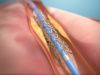
Bioresorbable scaffolds have been developed to provide temporary mechanical support, and to prevent long-term stent-related adverse events. Freesolve RMS is made of the proprietary BIOmag Magnesium Alloy and maintains a resorption time of 12 months.