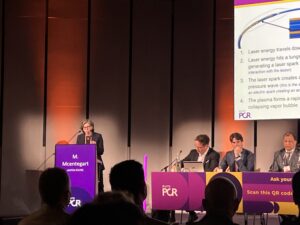
Results from the pivotal FRACTURE investigational device exemption (IDE) trial have demonstrated high rates of freedom from major adverse cardiac events (MACE) at 30 days as well as procedural success using the Seismiq 4CE (Boston Scientific) coronary intravascular lithotripsy (IVL) catheter to treat patients with severely calcified coronary artery disease (CAD). Findings from the trial were presented in a late-breaking trial session at the EuroPCR (19–22 May, Paris, France) 2026 congress.
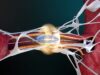
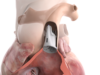
Presenting the results, Margaret Mcentegart—co-principal investigator of the FRACTURE trial and director of complex percutaneous coronary intervention (PCI) and chronic total occlusion (CTO) programmes at Columbia University Irving Medical Center in New York, USA—detailed that the Seismiq IVL catheter uses laser energy within a balloon catheter to generate acoustic pressure waves that fracture calcium. The system’s visible, directional emitters are designed to provide controlled, consistent energy delivery at low pressure to treat the calcium and prepare the vessel for stent implantation and maximum stent expansion to restore blood flow.
“As the prevalence of coronary artery disease and adoption of IVL therapy to address it continue to grow rapidly, data from this important trial will help advance our understanding of treatment for severely diseased, previously untreated coronary lesions and could help broaden the scope of coronary IVL treatment options over time,” said McEntegart. “Notably, stents were successfully delivered in all patients treated, no deaths occurred and only one patient underwent target vessel revascularization at the 30-day follow up, underscoring reassuring safety data for the Seismiq 4CE device.”
The prospective, non-randomised, single-arm FRACTURE trial enrolled 420 patients with severe CAD. Findings from the trial met all pre-specified safety and effectiveness endpoints. The primary safety endpoint was met with a 93.3% rate of freedom from major adverse coronary event (MACE), including cardiovascular death, myocardial infarction or target vessel revascularisation at 30 days, exceeding a prespecified performance goal of 86.2%.
A 93.7% rate of procedural success met the primary effectiveness endpoint, defined as successful stent delivery with a final residual stenosis of less than 50% and freedom from in-hospital MACE, exceeding a prespecified performance goal of 85.8%. Treatment with the Seismiq 4CE device resulted in 100% successful stent delivery and final in-stent residual stenosis less than 50%.
A sub-analysis of the data found a 94.2% average stent expansion rate at the most calcified segment of the artery, with favourable stent sizing that exceeded clinically significant thresholds, helping to create space within the vessel and support optimal stent placement.
“Representing one of the fastest growing medical device segments in both peripheral and coronary care, IVL therapy can help address a critical level of coronary artery narrowing or blockage that poses a threat of heart attack, heart failure and other serious complications,” said Janar Sathananthan, chief medical officer, Interventional Cardiology Therapies, Boston Scientific. “The data presented today serves as pivotal evidence to support our regulatory submission for the Seismiq 4CE catheter, which may provide physicians a new, differentiated coronary IVL device option to address severe calcium during the lesion prep phase of complex PCI procedures, potentially improving outcomes for these high-risk patients.”
The trial enrolled patients who will be followed for two years after their procedure across 46 sites in the USA and Europe.