A shortlist of four finalists has been named for the TCT Plus Middle East Shark Tank cardiovascular innovation competition, with a winner to be selected at the second edition of the conference taking place this week (17–19 September, Riyadh, Saudi Arabia).
TCT Plus Middle East is described by organisers as a regional platform for physicians, researchers, industry and innovators to advance cardiovascular care across the Middle East. The event is supported by the Cardiovascular Research Foundation (CRF)—the organisation behind the globally recognised TCT cardiovascular education brand.
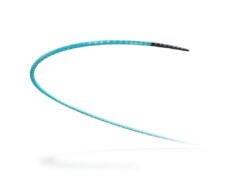
An initial 25 submissions from seven countries across three continents were considered for inclusion in the Shark Tank competition, with entries from King Abdullah University for Science & Technology (Thuwal, Saudi Arabia), Mayo Clinic (Rochester, USA), StarTric from Italy and IDAHealth from Belgium ultimately making the shortlist.
As at the global TCT meeting, after a short presentation detailing how each Shark Tank finalist addresses its unmet clinical need, an expert panel made up of cardiovascular physicians and med tech industry experts will run the rule over each of the submissions, before a winner is selected. The winning entry receives a US$200,000 prize, courtesy of Johns Hopkins Aramco Healthcare (JHAH).
Inclusion of the Shark Tank competition at TCT Plus Middle East is an important facet of the meeting as, organisers say, it helps to cement the Middle East’s status as a hub for innovation in cardiovascular care.
TCT Plus Middle East course co-director Khaled Al-Shaibi (King Fahd Armed Forces Hospital, Jeddah, Saudi Arabia) tells Cardiovascular News that placing innovation front and centre at the meeting aligns with Saudi Arabia’s broader aim to foster greater innovation within its healthcare sector inside the decade, a part of its Vision 2030 economic plan.
“Bringing TCT Shark Tank to the Middle East was important because the region is no longer simply a market for medical technology, it is increasingly becoming a source of healthcare innovation, research and investment,” he says. “The Shark Tank format adds something particularly valuable: it connects innovation with clinical reality and capital. Instead of an innovation being presented only as a scientific concept, the entrepreneur has to explain the clinical problem, demonstrate the technology’s potential and defend its value in front of experienced cardiovascular experts.
“The competition, therefore, isn’t just about finding a winner; it is about creating a pathway from clinical need to innovation through expert validation and then on to investment, clinical development and commercialisation.”
The emphasis on creating opportunities for innovation regionally was also behind JHAH’s decision to support the competition, according to Russell Hales, chief of the organisation’s Centers of Excellence.
“In alignment with Vision 2030 and in conjunction with the core values of JHAH, local innovation and discovery is critical for at least three reasons,” Hales comments to Cardiovascular News. “Data for improved health outcomes can often arise from Western and European patient cohorts but needs to be validated within our population in Saudi Arabia. Secondly, becoming equal partners in scientific discovery requires teams that focus on discovery within the Kingdom.
“Finally, the core of high-quality medical institutions will have an emphasis on patient care, world-class education and innovative research. As leaders in healthcare, we seek to build this expertise within the Kingdom and see TCT Plus Middle East Shark Tank as a critical way to seed opportunities to build expertise in scientific discovery.”
Finalists have had to demonstrate that their entry fills an unmet clinical need, has a preliminary patent application filed and has preclinical or early human clinical data. Following presentation during the opening session at TCT Plus Middle East 2026, judges will decide which of the entries best satisfies criteria spanning clinical importance, evidence, novelty, feasibility, scalability, commercial potential, and their potential impact on patient care.
“For me, the strongest ideas start with a real clinical problem rather than a technology looking for a problem,” says Al-Shaibi, who comments that, whilst technologically advanced solutions are important, what may be considered to be relatively simple solutions may also be compelling if they can demonstrate that they solve an existing problem effectively. “Ultimately, the test is not whether the technology is exciting. The test is whether a physician can look at it and say: ‘This could change what I do for my patients’.”