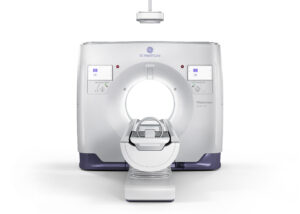
 GE HealthCare has achieved CE marking for Photonova Spectra, an advanced photon-counting computed tomography (PCCT) system with the company’s proprietary Deep Silicon detector technology.
“We are proud to deliver this new generation of photon-counting CT to the clinicians and patients around the world it was intentionally designed to serve,” commented Chad Rowland, executive director, Global CT, GE HealthCare. “At its core is our Deep Silicon detector technology, which enables Photonova Spectra to capture remarkably detailed, spectral information in every scan. That level of clarity and consistency aims to make a meaningful difference in both cutting-edge research and day‑to‑day care—from helping teams see subtle findings confidently to reducing steps across a wide range of exams. Ultimately, this innovative technology was created to advance imaging as well as support the people who rely on it.”
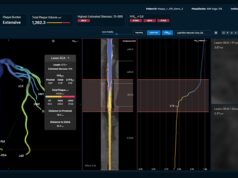
Photonova Spectra’s ultra-high definition (UHD) imaging is designed to work with wide coverage, enabling fast acquisition speeds and the precise visualisation of subtle tissue variations, small lesions and vascular structures, a GE press release states. In cardiology applications, GE adds that the new system will enable in-stent lumen assessment, plaque characterisation and myocardial assessment.
“Deep Silicon brings a meaningful evolution to photon-counting CT. Silicon’s unique properties as a semiconductor enables precise photon energy measurement, helping power advanced spectral imaging capabilities,” adds Johan de Mey (UZ Brussel-Vrije Universiteit Brussel, Brussels, Belgium). “For us, that may offer new opportunities to differentiate materials like iodine, calcium and fat, as well as provide image quality that holds up even in challenging patient scenarios. Additionally, with Photonova Spectra’s rapid 0.23‑second rotation speed and 80mm detector coverage, we can achieve fast, motion‑free acquisitions across care areas, helping ensure that detail and diagnostic confidence aren’t compromised. These advancements aim to provide a more reliable picture of how a condition is evolving or whether a treatment is truly working, supporting more timely and informed decisions for every patient.”