Two new studies show that GLP-1-based drug tirzepatide significantly reduces cardiovascular risk in high-risk patients–including those undergoing percutaneous coronary intervention (PCI) and those with obesity undergoing transcatheter aortic valve implantation (TAVI).
The pair of datasets were presented at the Society for Cardiovascular Angiography & Interventions (SCAI) 2026 Scientific Sessions and Canadian Association of Interventional Cardiology (CAIC-ACCI) Summit (Montreal, Canada; 23–25 April).
In one, presenter Revati Varma (Cook County Hospital, Chicago, USA) and colleagues showed that tirzepatide outperforms dulaglutide by reducing major adverse cardiovascular events (MACE), weight and HbA1c levels with real-world data on patients who undergo PCI. They used the TriNetX database to identify adult PCI patients with type-2 diabetes who received treatment with either tirzepatide or dulaglutide at the time of the procedure. They performed propensity score matching and assessed outcomes at one month and one year after the procedure.
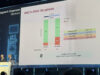
Among 1,281 patients, tirzepatide consistently reduced adverse outcomes compared to dulaglutide. Patients receiving tirzepatide experienced lower rates of MACE (relative risk [RR] 0.46; p<0.001), acute myocardial infarction (RR 0.47; p<0.001), heart failure exacerbation (RR 0.54; p<0.001), and ventricular arrhythmias (RR 0.56; p=0.03). There was no difference in rates of stroke. At one year, tirzepatide continued to show benefits, including consistent reductions in MACE, acute myocardial infarction and heart failure exacerbation, and reduced mortality (RR 0.38; p<0.001), stroke (RR 0.56; p=0.01) and cardiac arrest (RR 0.32; p<0.001).
“This study provides real-world evidence comparing two commonly used diabetes medications in a high-risk population,” said Varma
In the other study presented at SCAI/CAIC-ACCI 2026, tirzepatide was shown to reduce the risk of MACE by 30% after TAVI in patients with obesity.
Researchers led by Ibrahim Mortada (University of Texas Medical Branch, Galveston, USA) conducted a retrospective cohort study using TriNetX and identified adults with obesity who underwent the procedure from 2020–2025, grouping them based on tirzepatide use.
At one year, patients who did not receive tirzepatide experienced worse outcomes over time, with lower event-free survival (77.7% vs. 84.1%). These patients also faced a 54% higher risk of hospitalisation for acute heart failure compared with those receiving tirzepatide (hazard ratio [HR] 1.54, 95% confidence interval [CI] 1.11–2.13). Patients not treated with tirzepatide experienced MACE—death, myocardial infarction, stroke, heart failure, arrhythmia or intracerebral hemorrhage—44% more frequently (HR 1.44, 95% CI 1.22–1.70). However, researchers observed no significant differences between groups in rates of ischemic stroke (HR 0.92, 95% CI 0.60–1.39), acute myocardial infarction (HR 1.06, 95% CI 0.61–1.84), or acute kidney injury.
“The reduction in serious cardiovascular events without an increase in ischaemic or renal complications provides rationale for clinicians to seriously consider adjunctive metabolic therapy,” said Mortada.
The research groups note that the findings support the need for prospective randomized trials to determine whether tirzepatide should be incorporated into routine cardiometabolic management for patients with obesity undergoing TAVI.