New evidence cautions against the use of aspirin in patients with chronic coronary syndrome who have had prior stenting and require long-term oral anticoagulation.
Investigators in the AQUATIC trial, a double-blind placebo-controlled trial in chronic coronary syndrome patients after stenting receiving long-term oral anticoagulants conducted at more than 50 centres in France, found that the addition of aspirin was associated with increased cardiovascular events, death and major bleeding when compared with placebo.
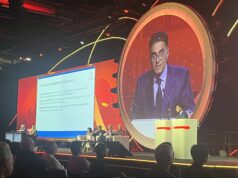
Martine Gilard (Hospital Cavale Blanche, Brest, France) presented the findings during a hot line session at the 2025 European Society of Cardiology (ESC) meeting, with the data published simultaneously in the New England Journal of Medicine.
“In AQUATIC, adding aspirin to oral anticoagulants increased significantly the risk of the primary outcome, major bleeding and all-cause death,” Gilard told attendees at ESC 2025. “These results confirm and extend the results of prior trials in a much higher risk—more than seven-fold higher risk—population of patients who have received stents. My conclusion is that stented patients on oral anticoagulants should not receive long-term aspirin, even if they are at high atherothrombotic risk.”
As many as 15% of patients with chronic coronary syndrome receive long-term anticoagulation therapy, Gilard and colleagues write in their New England Journal of Medicine paper, noting that these patients are often at high risk for both atherothrombotic and bleeding events.
In the trial, investigators defined a high atherothrombotic risk as either a history of percutaneous coronary intervention (PCI) during an acute coronary syndrome, or a history of PCI outside the context of acute coronary syndrome but with high-risk features such as diabetes, chronic kidney disease, diffuse multivessel disease, history of complex PCI or peripheral artery disease.
Patients were randomised 1:1 to aspirin or placebo on top of oral anticoagulation. The trial’s primary efficacy endpoint was a composite of cardiovascular death, myocardial infarction (MI), stroke, systemic embolism, coronary revascularisation and acute limb ischaemia. The key secondary safety endpoint was major bleeding according to the International Society on Thrombosis and Haemostasis (ISTH) definition.
The trial was stopped early on the advice of the trial’s independent Data Safety Monitoring Board after a median follow-up of 2.2 years due to an excess of all-cause mortality in the aspirin group. The 872 patients randomised had a mean age of 72 years and 14.5% were female.
The primary efficacy outcome occurred in significantly more patients in the aspirin group than the placebo group (16.9% vs. 12.1%), with all-cause death also observed significantly more in patients with aspirin vs. placebo (13.4% vs. 8.4%.
The risk of major bleeding was more than three-fold higher in the aspirin group than the placebo group (10.2% vs. 3.4%), Gilard detailed. A total of 467 and 395 serious adverse events were reported in the aspirin and placebo groups, respectively.
In their New England Journal of Medicine paper, the authors note several limitations of their study, most notably its early termination, as well as the fact that all of the centres involved were located in a single country. Enrolment was also impacted by the COVID-19 pandemic, and women were under-represented in the trial.
However, in light of the findings the researchers suggest that the data should be considered in future ESC Guidelines to build on current recommendations, which are based on expert consensus.