The Pascal Precision (Edwards Lifesciences) transcatheter edge-to-edge repair (TEER) system demonstrated superiority over optimal medical therapy alone for the six-month primary endpoint of the randomised CLASP II TR trial, in patients with symptomatic severe or greater tricuspid regurgitation (TR). The result, driven primarily by improvements in patient-reported health status, was accompanied by significant reductions in TR severity sustained through one year.
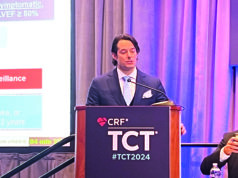
Results of the randomised CLASP II TR trial, presented during a late-breaking trials session at the 2026 Transcatheter Cardiovascular Therapeutics (TCT) conference (31 October–3 November, San Diego, USA), showed a win ratio of 1.98 (p=0.001) in favour of Pascal. At one year, 80% of patients treated with PASCAL achieved moderate or less TR, compared with 30% of patients receiving medical therapy alone.
Patients treated with PASCAL also experienced clinically meaningful improvements in quality of life, measured using the Kansas City Cardiomyopathy Questionnaire (KCCQ). However, there was no significant difference in all-cause mortality or heart failure hospitalisation between the two groups at one year, Suzanne Arnold (University of Missouri-Kansas City, Kansas City, USA) and Charles Davidson (Feinberg School of Medicine, Chicago, USA) reported at TCT 2026.
CLASP II TR is a prospective, randomised study, designed to evaluate the safety and efficacy of the Pascal system in patients with symptomatic severe or greater TR. A total of 450 patients were randomised 2:1 to receive Pascal plus optimal medical therapy or optimal medical therapy alone, with the aim of determining whether transcatheter intervention could improve clinical outcomes, symptoms and quality of life. The rationale was to address the unmet need for effective treatment options for patients with significant TR, for whom medical therapy alone often provides limited symptomatic relief.
The trial was originally designed with a two-year endpoint. However, following the commercial approval of two alternative transcatheter tricuspid technologies in 2024, patients in the control group increasingly sought treatment outside the trial. This resulted in substantial crossover and attrition, particularly in the control group.
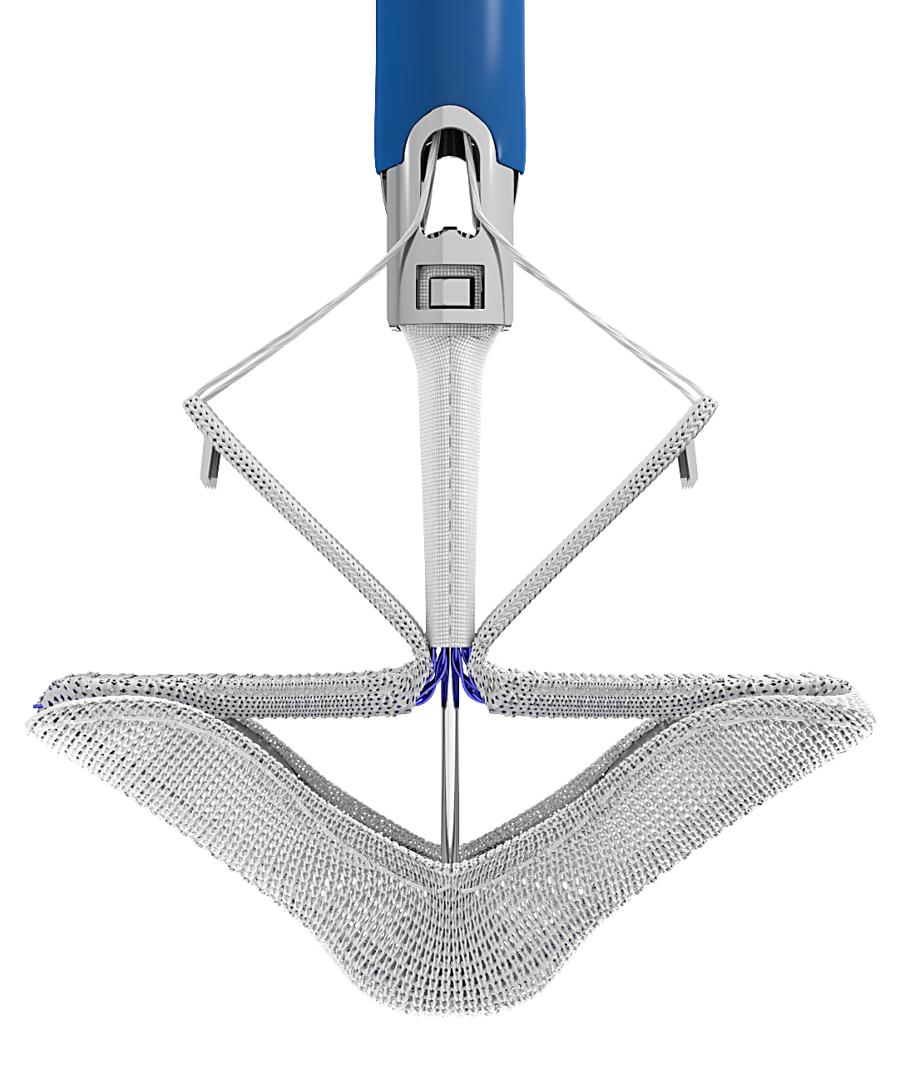
The Pascal implant consists of a central spacer and adjacent paddles and clasps that attach the implant to the native leaflets to reduce regurgitation. The central spacer helps fill the regurgitant orifice and minimise stress on the leaflets. The clasps can be actuated either simultaneously or independently when clasping the leaflets. The Pascal system received US Food and Drug Administration (FDA) approval for tricuspid valve repair in October 2026 and CE marking in 2020.
“These CLASP II TR results build upon an already established body of strong clinical evidence supporting the Pascal system for tricuspid patients,” said Davidson. “The Pascal system’s ability to elongate to avoid chordal entanglement, atraumatic leaflet grasping, and precise navigation are especially well-suited to navigate complex and challenging tricuspid valve anatomies, making it a differentiated treatment option for these patients.”