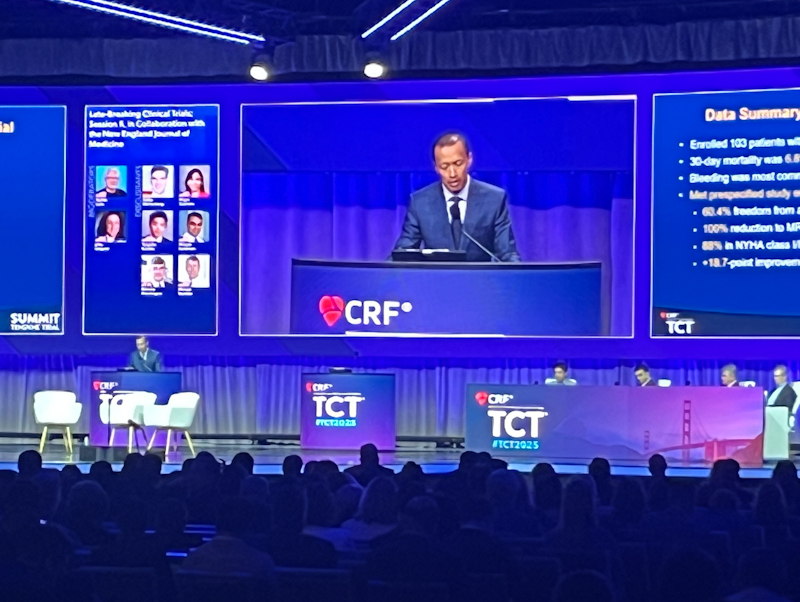
Study design and baseline characteristics of patients enrolled in the Evolut EXPAND TAVR II trial were presented today as featured clinical science at the Transcatheter Cardiovascular Therapeutics (TCT) conference (31 October–3 November, San Diego, USA).
EXPAND TAVR II is the first prospective, randomised trial evaluating the self-expanding, supra-annular Evolut (Medtronic) transcatheter aortic valve implantation (TAVI) platform in patients with moderate aortic stenosis. The trial investigates whether TAVI combined with guideline-directed medical therapy (GDMT), can improve clinical outcomes compared with GDMT alone.
Moderate aortic stenosis is associated with significant adverse cardiac events, heart failure hospitalisations, and increased mortality. EXPAND TAVR II addresses an important clinical question: whether patients with moderate aortic stenosis, and features that place them at increased risk, may benefit from aortic valve intervention before their disease becomes severe.
“Moderate aortic stenosis can be accompanied by symptoms and cardiac damage, yet important questions remain about when to intervene,” said Paul Sorajja (Banner – University Medical Center, Phoenix, USA) co-principal investigator of the study. “Understanding the clinical and anatomic characteristics of the EXPAND TAVR II population will provide essential context for interpreting the trial’s future results and determining whether earlier TAVI can improve outcomes in these patients.”
The international, multicentre trial includes 692 patients randomised at 96 sites across 16 countries. Participants are aged 65 years or older, have core-laboratory-confirmed moderate aortic stenosis and at least one at-risk feature.
At enrolment, the mean age of participants was 78.4 years, 42.3% were female, and more than 90% were New York Heart Association (NYHA) functional class II or higher.
“EXPAND TAVR II is designed to generate rigorous evidence to help clinicians address meaningful gaps in patient care and make informed decisions about when to intervene in moderate aortic stenosis,” said Kendra Grubb, vice president and chief medical officer of Medtronic Structural Heart. “EXPAND II investigates whether intervening earlier in the progression of aortic stenosis can make a difference for patients at increased risk. The presentation today establishes the foundation by defining who is enrolled and detailing the trial designed to assess safety and effectiveness.”
The trial is designed to assess safety at 30 days and effectiveness at two years, with patient follow-up planned through 10 years. As part of the study protocol, patients were managed by a heart failure cardiologist in strict accordance with guideline-directed medical therapy. The primary effectiveness endpoint is a composite of all-cause mortality, heart failure hospitalisation or event, or medical instability leading to aortic valve replacement or reintervention. This endpoint will be evaluated for superiority between the two treatment groups.