 iPerf has announced the conclusion of its first clinical trial evaluating its dual-lumen femoral arterial cannula for cardiopulmonary support.
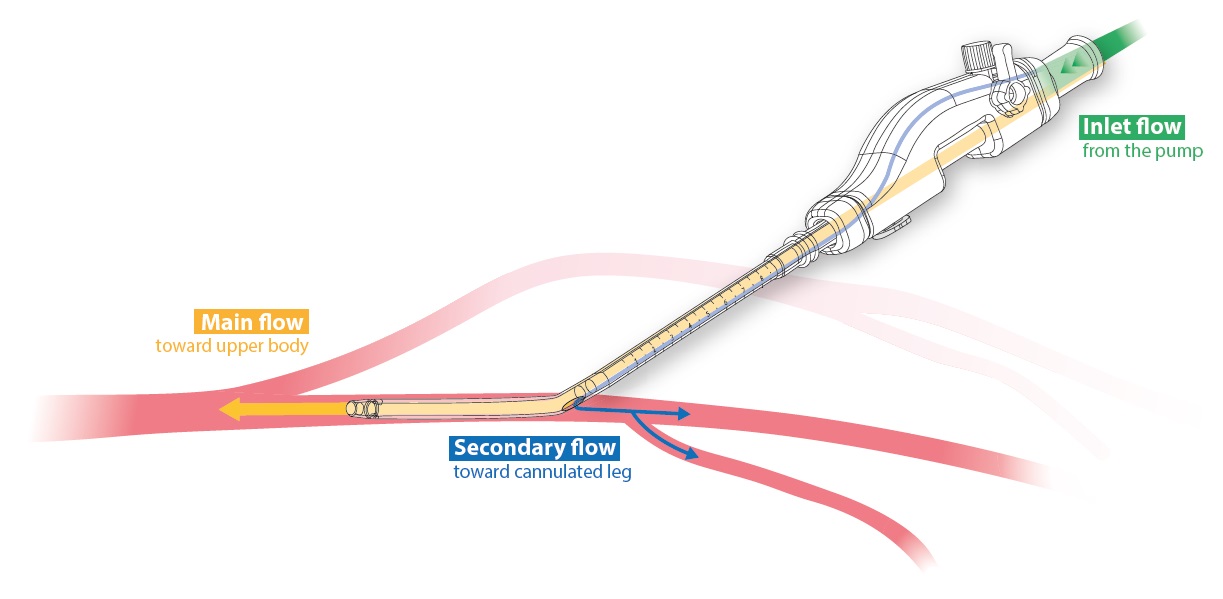
The device is designed to provide arterial flow for cardiopulmonary support while maintaining blood flow to the cannulated limb, aiming to address limb ischaemia, a serious vascular complication associated with femoral arterial cannulation in critical care and cardiac surgery.
The study evaluated the device in 15 patients receiving femoral cardiopulmonary bypass for minimally invasive cardiac surgery. Tissue oxygenation was monitored in the cannulated leg throughout the procedure using near-infrared spectroscopy (NIRS). No device-related serious adverse events were reported during the trial, while NIRS monitoring showed maintained tissue oxygenation in the cannulated limb. The clinical trial was led by Pierre Demondion and Fabien Doguet, cardiovascular and thoracic surgeons at the Institut de Chirurgie Cardiaque, Hôpital Privé Jacques-Cartier, in Massy, France.
“Completing this clinical trial marks an important milestone in our efforts to address one of the key challenges associated with femoral arterial cannulation,” said Maya Bertron, CEO of iPerf. “We are grateful to the investigative team for their dedication and commitment to this trial. We look forward to presenting our results at the AATS [American Association for Thoracic] Surgery Mechanical Support and Thoracic Transplantation Summit next month [2–3 October, Toronto, Canada].”
The device, developed by the co-founder of iPerf, Pierre Mordant, thoracic and vascular surgeon at the Hôpital Bichat (AP‑HP, Paris-Cité University, Paris, France), is designed to reduce the severe complications associated with femoral extracorporeal membrane oxygenation ECMO and cardiopulmonary bypass (CPB) cannulas. These cannulas are used in cases of cardiac failure associated with myocardial infarction, aggravation of a cardiac pathology, cardiac arrest, or as part of minimally invasive cardiac surgery. The device also features an innovative positioning system for percutaneous placement, making it the first solution of its kind.
“This simple and elegant solution could represent a significant advancement in patient safety, not only in the context of ECMO, but also for cardiopulmonary bypass procedures involving femoral cannulation—by helping to prevent any risk of ischaemic complications,” said Demondion.