This advertorial is sponsored by Cordis
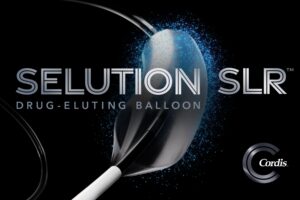
This year’s Transcatheter Cardiovascular Therapeutics (TCT) conference (24–27 October, San Francisco, USA) represented a landmark moment in the evolution of drug-coated balloon (DCB) technologies with the release of results from the SELUTION DeNovo trial, demonstrating the non-inferiority of a SELUTION SLR™ Drug-Eluting Balloon (DEB) treatment strategy to a systematic drug-eluting stent (DES) treatment strategy in coronary de novo lesions reflective of patients seen in real-world practice.
This technology has emerged as a new alternative to the DES for the treatment of coronary artery disease, the mainstay for percutaneous coronary intervention (PCI) procedures worldwide. However, as their use has gained traction over time, limitations of the technology have become apparent, including a reported 2–4% annual adverse event rate at long-term follow-up.1,2 This has given rise to a need for new strategies to minimise stenting or leave no permanent implant behind following a PCI procedure.
DCB technologies offer promise in overcoming these limitations, facilitating the delivery of potent antiproliferative drugs without the need for a permanent scaffold. However, whilst there have been promising data in select subsets, DCBs have yet to excel in studies involving de novo coronary artery disease.
Most DCB technologies in current circulation use paclitaxel, a cytotoxic antirestenotic drug with a crystalline formation that allows sustained drug retention.3 However, paclitaxel’s large particle sizes, ranging between 100–400µm, may present a downstream embolisation risk.4 Sirolimus, the agent used in SELUTION SLR DEB, is a cytostatic drug with a wider therapeutic window and a larger safety margin than paclitaxel, but can be more challenging to apply to the balloon surface.5
SELUTION SLR DEB uses 4µm microreservoirs, including sirolimus mixed with a biodegradable PLGA polymer and covered with a proprietary phospholipid coating, intended to protect the microreservoirs during delivery and enhance drug transfer efficiency at the lesion site. This design provides an effective dose of 1µg/mm² sirolimus, similar to DES, which remains active in the tissue for up to 90 days.
The pharmacokinetic profile of this device has been tested in a porcine study conducted in 36 animals over four timepoints. This study, performed by Aloke Finn (University of Maryland School of Medicine, Baltimore, USA) and colleagues, compared the in vivo pharmacokinetic drug release profile of SELUTION SLR DEB to the MagicTouch DCB (Concept Medical) and Xience DES (Abbott). Results of the study, published in Cardiovascular Revascularization Medicine, showed SELUTION SLR DEB sustained drug levels in the arterial wall comparable to the Xience (Abbott) Everolimus-Eluting Stent up to 90 days, as well as lower drug levels in downstream myocardium compared to MagicTouch DCB.6
“Drug-coated balloons represent a heterogeneous class of devices. The differences in active agents, excipients, and carrier technologies lead to unique clinical behaviours,” says Finn.
To put the SELUTION SLR DEB technology to the test in a clinical setting, SELUTION DeNovo trial investigators devised a prospective, randomised, open-label, multicentre trial, to compare its performance against a systematic DES strategy amongst a broad, all-comers population with de novo vascular lesions between 2–5mm. This design was intended to reflect the types of patients seen in everyday practice as closely as possible.
With a total of 62 sites enrolling in 12 countries across Europe and Asia, the SELUTION DeNovo trial represented the largest randomised trial in the coronary DCB field conducted to date, recruiting a total of 3,341 patients—1,671 randomised to the DEB strategy arm and 1,670 to the DES strategy arm. A high proportion of patients (17.8% in the DEB group and 16.3% in the DES group) were at high bleeding risk, whilst around one third of patients presented with acute coronary syndrome. Nearly a quarter of patients in the DEB strategy arm had moderate or severely calcified lesions.
Unlike prior DCB trials, randomisation occurred after target lesions were considered suitable for either strategy and prior to lesion preparation, allowing operators to commit to a strategy rather than reacting to procedural results, reflecting clinical reality. In the DEB arm operators were given the option to perform provisional stenting if needed for high-risk dissection or residual stenosis—with 80% of patients requiring only DEB intervention.

“In the stent arm you followed your guidelines and local practices. If stent delivery was not possible, you were allowed to use other devices,” Simon Eccleshall (Norfolk and Norwich University Hospitals NHS Foundation Trust, Norwich, UK), a co-principal investigator in the trial explains of the pragmatic design of the trial. “In the SELUTION SLR DEB arm, you would perform optimal lesion preparation. If there was a problem after lesion preparation or delivery of the SEB balloon, then you could use drug-eluting stent.”
At TCT 2025, co-principal investigator Christian Spaulding (Hôpital Européen Georges-Pompidou, Paris, France) reported the SELUTION DeNovo trial’s primary endpoint, target vessel failure (TVF)—comprising cardiac death, target-vessel myocardial infarction (MI), or clinically driven target revascularisation—occurred in 5.3% of the DEB strategy group and 4.4% of the DES strategy group at one year, meeting the non-inferiority criteria. Additionally, no acute or late safety concerns were noted with the DEB versus DES strategy, with low rates of cardiac death (0.7% vs 1%), lesion thrombosis (0.1 %vs 0.3%), and target vessel MI (2.7% vs 2.6%), making it comparable with DES.
Results of the trial highlight several key points. First, the DEB strategy demonstrated safety and feasibility with no acute or late safety concerns, even in a broad range of lesions reflecting real-world practice. “We need to make a big noise about the results, this is a game-changer,” Eccleshall commented of the safety results seen in the SELUTION DeNovo trial. “If you’ve done a good job of your lesion preparation, you’re as safe leaving the lab without a stent as with a stent.”
“We need to make a big noise about the results, this is a game-changer,” Simon Eccleshall
Furthermore, provisional stenting was performed in only 20.7% of patients in the DEB strategy arm. Given the theoretical advantage of not leaving an implant behind is likely to be seen in the longer-term, investigators will follow outcomes out to five years, with a potential to test for the superiority of the DEB over the DES-first strategy. And, given the specific properties of the SELUTION SLR DEB, the trial’s results underscore that a class effect cannot be applied to other DCBs used in the coronary arteries.
“I think it should be said at every single meeting that there is no class effect for drug-eluting balloons of whatever type,” Eccleshall comments. “We shouldn’t be talking about the drug—we should be naming the product every time that we present any data. I think it’s that important.”
Also presented at TCT 2025 were results of the SELUTION4ISR trial. The US randomised trial compared SELUTION SLR DEB to a control group consisting of DES or balloon angioplasty for the treatment of bare-metal stent or DES in-stent restenosis, which comprise around 10% of PCI cases. SELUTION SLR DEB demonstrated non-inferiority, against a primary endpoint of target lesion failure (TLF) consisting of cardiac death, target vessel MI or clinically driven target lesion revascularisation at one year, further underlining the clinical utility of the device.
To follow the outcomes of the device out to the long-term, Cordis has initiated the SELUTION global coronary registry, a prospective study enrolling up to 10,000 patients worldwide. The registry will track real-world outcomes of the device for up to five years and will complement the results from the ongoing randomised trials, helping to guide which patients are best suited for the DEB approach.
References
- Madhavan MV, Kirtane AJ, Redfors B, et al. Stent Related Adverse Events >1 Year After Percutaneous Coronary Intervention. J Am Coll Cardiol. 2020;75(6):590 604. doi:10.1016/j.jacc.2019.11.058.
- Kufner S, Ernst M, Cassese S, et al. 10 Year Outcomes From a Randomized Trial of Polymer Free Versus Durable Polymer Drug Eluting Coronary Stents. J Am Coll Cardiol. 2020 Jul 14;76(2):146 58. doi:10.1016/j.jacc.2020.05.026.
- Granada JF, Stenoien M, Buszman PP et al. Mechanisms of tissue uptake and retention of paclitaxel-coated balloons: impact on neointimal proliferation and healing. Open Heart. 2014;1(1):e000117. doi:10.1136/openhrt-2014-000117.
- Kawai K, Nüesch E, Praz F, et al. Vascular response, downstream effect, and pharmacokinetics after sirolimus- and paclitaxel-coated balloons in porcine coronary arteries. Catheter Cardiovasc Interv. 2025;[epub ahead of print]. doi:10.1002/ccd.31482.
- Gurgoglione FL, De Gregorio M, Benatti G, et al. Paclitaxel Coated Versus Sirolimus Coated Eluting Balloons for Percutaneous Coronary Interventions: Pharmacodynamic Properties, Clinical Evidence and Future Perspectives. Future Pharmacol. 2024;4(4):775 787. doi:10.3390/futurepharmacol4040041.
- Tanaka T, Kawakami R, Shiraki T, et al. A pharmacokinetic comparison between three drug delivery devices in porcine coronary arteries. Cardiovasc Revasc Med. 2025 Sep 11; [Epub ahead of print]. doi: 10.1016/j.carrev.2025.09.001.