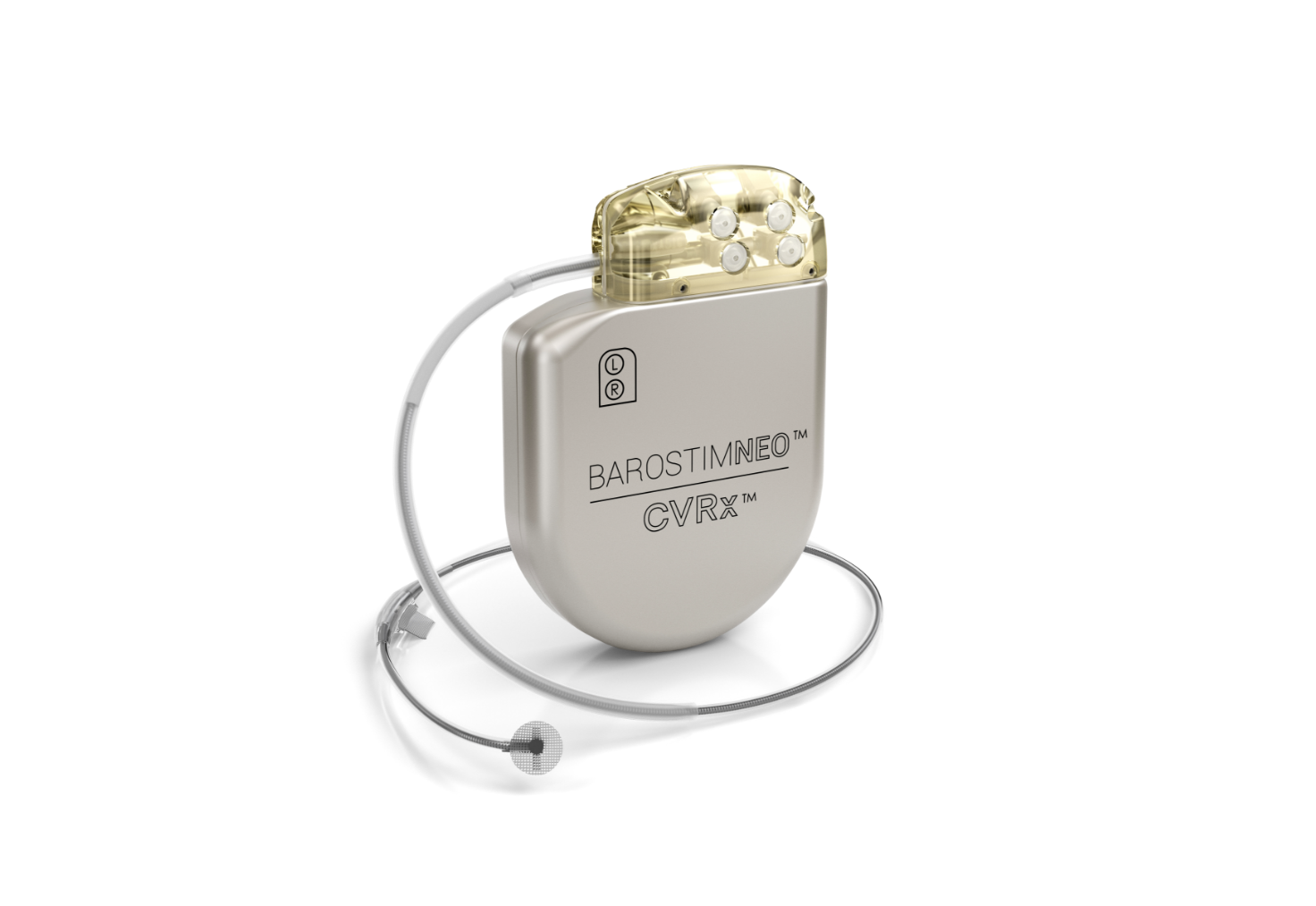
 Initial six-month outcomes from the REBALANCE registry, assessing baroreflex activation therapy with the Barostim (CVRx) neuromodulation device in patients with heart failure with reduced ejection fraction (HFrEF), presented at the 2026 Technology and Heart Failure Therapeutics (THT) conference (2–4 March, Boston, USA), demonstrate improvements in left ventricular ejection fraction (LVEF) and New York Heart Association (NYHA) class among patients treated with the technology.
These changes occurred despite investigators observing no major shift in markers including levels of NT-proBNP and estimated glomerular filtration rate (eGFR) over the course of their analysis, which represents the first three months of fully titrated therapy following the implant of the device.
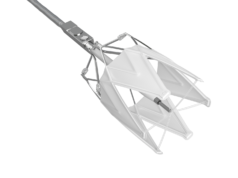
Barostim is an implantable device that delivers electrical signals to baroreceptors located on the carotid artery, which is intended to increase baroreflex signalling, thereby rebalancing the autonomic nervous system and improving heart failure symptoms.
“Abnormal baroreflex signalling is the initial step in activation of neurohormonal pathways that are responsible for heart failure progression. Neurohormonal blockade is the basis for drug therapies to prevent heart failure progression and improve outcomes in those patients,” Dmitry Yaranov (Baptist Heart Institute, Memphis, USA), who presented the results of the registry at THT, commented. “Barostim baroreflex activation therapy can complement drug therapy by acting upstream to restore baroreflex signalling in those patients.”
REBALANCE is a postmarket observational study designed to evaluate real-world data on the safety and benefit of the therapy in the commercial setting, involving 435 patients.
An earlier, multicentre, prospective, postmarket randomised controlled trial of the treatment—BeAT-HF—failed to reach statistical significance when Barostim was compared to guideline-directed medical therapy against a primary composite endpoint of cardiovascular mortality and worsening heart failure events when compared against guideline-directed medical therapy alone. However, Yaranov pointed out that BeAT-HF did show lasting improvements in metrics including six-minute walk test and NYHA class, leading to approval of the device.
The REBALANCE registry enrolled patients who received the device in both on-label and off-label uses, following commercial approval. Yaranov detailed that the dataset represents at least 33% of patients who received the device off-label with NT-proBNP >1600pg/ml, LVEF >35% and NYHA class I and IV symptoms.
“Those patients were older than patients in BeAT-HF, they had a lot better uptake of guideline-directed medical therapy, mainly driven by a larger percentage of patients on SGLT-2 inhibitors and ARNI,” he detailed.
Rates of NT-proBNP, BNP and eGFR were largely unchanged at the six-month follow-up compared to baseline, though investigators also noted no adverse changes in systolic and diastolic blood pressure and heart rate. Yaranov reported, however, that there was a significant improvement in LVEF, increasing from a mean of 26.8% at baseline to 29.9% at six months, whilst 34% of patients improved at least one NYHA class.
“In this initial six-month real-world analysis, Barostim was associated with significant improvement in NYHA class, in LVEF, and no adverse effects on systolic and diastolic blood pressure and heart rate were noted,” Yaranov said.
Asked why he thought there was a divergence in the biomarkers and the improvement in LVEF in the results, Yaranov said that the way that the data were collected may have had a bearing on the finding.
“If a patient was doing well and at home, they would not normally come and do NT-ProBNP,” he said. “A lot of these were collected during exacerbation if it happened, we still imputed those numbers from that dataset. I think that’s why we don’t see the biomarker differences in this dataset.”
More data will be collected in the BENFIT-HF trial, recently announced by the company, evaluating the impact of the device in a significantly expanded heart failure population.
“That will include an extended cohort of patients with LVEF >35%, <50%, and higher NT-proBNP levels <5,000pg/m. I think once we get those results, we should be able to sort out the effects of baroreflex activation therapy in this patient cohort,” Yaranov said.
The BENEFIT-HF trial is expected to randomise 2,500 patients in 150 centres in the USA and Germany with a composite primary endpoint of all-cause mortality and heart failure decompensation events.