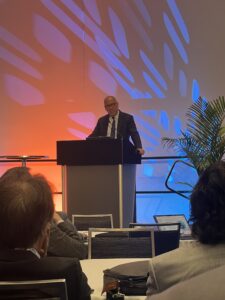
The 90-day results of the STORM-PE randomised controlled trial (RCT) have demonstrated that patients with acute intermediate-high risk pulmonary embolism (PE) who were treated with computer-assisted vacuum thrombectomy (CAVT) plus anticoagulation achieved greater functional improvement, including walking significantly further and a higher proportion of patients achieving New York Heart Association (NYHA) class I (no physical limitations), compared to anticoagulation alone. The first-of-its kind data were presented at the Society of Interventional Radiology (SIR) annual scientific meeting (11–15 April, Toronto, Canada).
STORM-PE is a pivotal, prospective, multicentre RCT that enrolled 100 patients across 22 international sites to evaluate computer assisted vacuum thrombectomy (CAVT) using Penumbra’s Lightning Flash plus anticoagulation, versus anticoagulation alone, for the treatment of acute intermediate-high risk PE.
“Together with the initial STORM‑PE results, which demonstrated faster reperfusion and improved right ventricular recovery, this 90 day data highlights significant patient‑cantered benefits of CAVT in intermediate‑high risk PE,” said Robert Lookstein, co‑global principal investigator and professor of radiology and surgery at the Icahn School of Medicine at Mount Sinai (New York, USA), presenting the results of the trial at SIR 2026. “This pivotal trial continues to build important clinical evidence supporting the role of endovascular therapy beyond anticoagulation alone and helps inform how treatment strategies including CAVT for PE may continue to evolve in future clinical guidelines.”
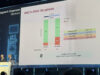
At 90 days, patients treated with CAVT plus anticoagulation walked significantly longer distances during the six-minute walk test (479m vs. 368m; p=0.003). The results showed that this metric near normalised, with patients walking 94% of their predicted walk distance vs. 75.2% in the anticoagulation only arm (p=0.022).
Lookstein reported that patients experienced no physical limitation based on NYHA functional class scale compared to the anticoagulation only arm (97% vs. 76%, p=0.022). He stated that patients returned to pre-PE functional status distribution while the anticoagulation-only arm did not. Additionally, improved quality of life and reduced shortness of breath was observed, which were comparable in both arms.
Further, safety rates through 90 days were comparable in both arms, with no device-related mortality, no additional PE-related mortality past seven days, and no difference in symptomatic PE-recurrence, confirming the safety profile of CAVT.
“STORM-PE continues to highlight emerging benefits of treatment beyond anticoagulation alone for patients with intermediate‑high risk PE,” said Rachel Rosovsky, co‑global principal investigator of STORM‑PE, haematologist at Massachusetts General Hospital in Boston, USA, and associate professor of medicine at Harvard Medical School. “These functional endpoints are important because they reflect outcomes that matter to patients and directly affect their daily lives. Collectively, the STORM‑PE data suggest that PE care is evolving, and that the thoughtful adoption of endovascular treatment options has the potential to greatly improve patient outcomes and recovery.”
“Historically, there has been limited randomised evidence describing how different treatment strategies for PE influence longer‑term recovery,” said James F Benenati, chief medical officer at Penumbra. “In STORM‑PE, those treated with CAVT achieved significantly greater gains in objective functional measures, including six‑minute walk distance, compared to anticoagulation alone. Data from STRIKE-PE support a similar recovery trajectory in a broader patient population. Together, these findings provide robust evidence supporting a greater role for CAVT in the treatment of acute intermediate‑high risk PE and reinforce its impact on physiological and functional outcomes.”