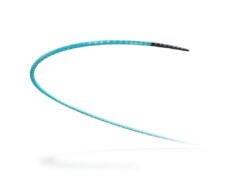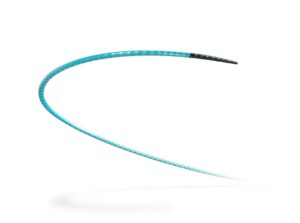
Interventional Medical Device Solutions (IMDS) has announced the US launch of NHanceIT, an over-the-wire, single-lumen microcatheter designed to improve lesion crossing in challenging coronary anatomy.
In a press release, IMDS says that increasing lesion resistance can impede guidewire advancement and delay treatment delivery during complex percutaneous coronary intervention (PCI), adding that its proprietary Skeleton Backbone technology replaces traditional catheter construction with a solid, laser-cut stainless-steel tube tailored across critical catheter sections to address distinct procedural challenges.
The technology enables NHanceIT to maintain force transmission from the hub to distal end, with 1:1 torque response and reinforced metal construction supporting controlled entry into resistant lesions, while the integrated radiopaque tip maintains structural integrity when navigating calcified anatomy and crossing through stents.
Following one of the first US commercial cases using NHanceIT, Jaikirshan Khatri, director of Cardiac Catheterization Laboratories at NewYork-Presbyterian/Weill Cornell Medical Center (New York, USA), commented: “This catheter is truly incredible. In tortuous and calcified anatomy, you need strong push and torque to get to the lesion and then you must cross. NHanceIT’s ability to deliver through challenging anatomy is impressive.”
“I had the opportunity to provide clinical input during the development of NHanceIT, with the goal of addressing the practical demands operators face in complex PCI,” said Emmanouil Brilakis, director of the Center for Complex Coronary Interventions at Allina Health Minneapolis Heart Institute (Minneapolis, USA) and co-developer of NHanceIT. “What stood out most about NHanceIT was how familiar it felt to use. Yet when the case became more demanding, it provided the additional support needed, making it practical to incorporate into everyday complex PCI.”
“NHanceIT represents an important step in bringing our proprietary Skeleton Backbone platform to more physicians in the USA and around the world,” said Edwin Schulting, CEO of IMDS. “This is an entirely new catheter technology that enables us to tailor each device to the specific clinical challenge it is intended to address and, ultimately, help improve outcomes in complex PCI.”
Skeleton Backbone technology is now available in the USA in Micro Rx, ShapeIT, and NHanceIT. Following the US launch, IMDS says it will continue expanding availability of NHanceIT and partnering with chronic total occlusion (CTO) and complex high-risk indicated PCI (CHIP) operators to build real-world experience with the Skeleton Backbone platform.