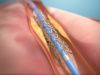
Simpson Interventions has announced that its Acolyte image-guided crossing and re-entry catheter system has been successfully used to treat the first patients in the Acolyte study, a pivotal investigational device exemption IDE clinical trial designed to assess the safety and effectiveness of the system in treating coronary chronic total occlusions (CTOs) with persistent symptoms following medical therapy.
“Our team is thrilled to have successfully treated the first patients with the Acolyte System,” said Bill Nicholson, director of interventional cardiology for Emory University (Atlanta, USA) and primary operator on the first cases. “The ability to clearly visualise the CTO in real-time and precisely position a guidewire with the same device potentially represents an important leap forward in efficiently and predictably treating coronary CTOs.”
“We are pleased to be the first site to treat a patient in this important trial,” added Wissam Jaber, medical director of cardiac catheterization laboratory at Emory University Hospital and principal investigator for the Acolyte study. “CTOs have long been regarded as ‘the final frontier’ of PCI due to their inherent complexity and lack of suitable devices. The Acolyte system represents a promising approach to enable interventional cardiologists to more effectively, consistently and safely treat these complex lesions, potentially allowing more patients to benefit from a minimally invasive PCI approach.”
According to the Journal of the American College of Cardiology: Cardiovascular Interventions, 16–20% of patients with coronary artery disease have CTOs, which occur when a coronary artery is completely blocked by plaque buildup, posing significant challenges for interventional cardiologists who currently lack effective tools to reliably cross these lesions with current standard of care options. If a CTO cannot be crossed with an interventional wire, minimally invasive revascularisation options such as angioplasty and stent placement cannot be performed. Hence, many CTO patients are instead sent for invasive coronary artery bypass (CABG) surgery or are left treated with medical therapy alone. The Acolyte real-time image-guided crossing and re-entry catheter system is designed to overcome the current challenges. The technology is designated by the US Food and Drug Administration (FDA) as a breakthrough device and has enrolled in the FDA Total Product Life Cycle Advisory Program (TAP).
“We are excited to have enrolled the first patient in this pivotal trial for our novel technology,” said Joseph Knight, chief executive officer of Simpson Interventions. “The goal for all interventional cardiologists is to treat every patient with the safest and most predictable and minimally invasive approach. We believe that the Acolyte system will provide the medical community with a valuable tool to conquer CTOs, which will, most importantly, be a win for cardiologists, hospitals, payers, and most of all, the patients.”