AISAP has announced the publication of a new clinical study in the peer-reviewed journal Frontiers in Digital Health, providing clinical evidence for its deep learning model for the detection of significant valvular disease and ventricular dysfunction.
The study, titled “Artificial intelligence assessment of valvular disease and ventricular function by a single echocardiography view,” analysed more than 120,000 echocardiographic studies to train the model, which was then validated against a prospective cohort of patients.
By capturing structural and temporal cardiac features across the cardiac cycle, the model demonstrated that artificial intelligence (AI) can identify meaningful signatures of heart disease from standard 2D grayscale clips alone, without the need for traditional and complex modalities such as colour flow doppler. The results demonstrated significant diagnostic performance, with the AI achieving an area under the curve (AUC) of up to 0.97 for detecting reduced ejection fraction and 0.95 for right ventricular dysfunction during real-world prospective testing.
“The findings of this study represent a significant shift in how we approach cardiac screening,” said Lior Fisher, lead author and physician at the Leviev Cardiovascular Institute at Sheba Medical Center (Ramat Gan, Israel). “By proving that a single-view acquisition can yield such high diagnostic accuracy for major pathologies like heart failure and valvular regurgitation, we are effectively removing the technical barriers to cardiac imaging. This allows a much broader range of clinicians to identify potentially life-threatening conditions at the point of care, long before a patient reaches the echo lab.”
In traditional clinical settings, a comprehensive echocardiogram requires a highly trained sonographer, multiple imaging angles, and expert interpretation by a cardiologist, a process that can take days or weeks.
This study confirms how AISAP’s technology can bypass these bottlenecks, allowing frontline clinicians in emergency rooms, rural clinics, and internal medicine wards to provide immediate, specialist-grade triage, the company says in a press release.
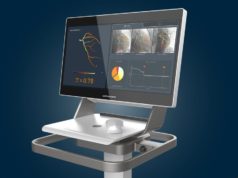
“This validation reflects our commitment to continue advancing what’s possible with AI in healthcare,” said Adiel Am-Shalom, chief executive and co-founder of AISAP. “By proving that AI can rapidly extract clinically meaningful signatures from minimal ultrasound data, this study confirms that our POCAD platform isn’t just a tool for clinicians, it is a potential lifeline for patients. Delivering specialist-level insights from a single view enables timely, bedside decision-making and the immediate detection of heart disease anywhere in the world, from major US health systems to remote rural clinics.”