Operative mortality for surgical aortic valve replacement (SAVR) procedures performed after prior transcatheter aortic valve implantation (TAVI) has improved “dramatically” over the last decade, as surgeons deal with an exponential increase in the volume of TAVI explant cases.
This is one finding of an analysis drawing on data from the Society of Thoracic Surgeons (STS) Adult Cardiac Surgery Database characterising risk over time, used to validate a dedicated risk model to support decision-making for patients requiring surgery after TAVI. Results of the analysis, where investigators examined outcomes from more than 5,700 patients who underwent SAVR after TAVI at nearly 700 US centres between 2014 and 2025, were presented as a late-breaking study at the 2026 STS annual meeting (29–31 January, New Orleans, USA).
The analysis straddles a period that has seen a rapid expansion in TAVI, during which time transcatheter procedures have overtaken surgery as the predominant approach for the treatment of aortic valve replacement in the USA. TAVI procedures also now make up close to half of all aortic valve replacements for patients under the age of 65 years.
Growth in TAVI has given rise to a marked increase in the need for surgical explant and replacement of failing TAVI valves—with a 12-fold increase in such procedures seen over the 12 years studied. These are often required alongside concomitant procedures, such as mitral valve repair or coronary artery bypass graft (CABG) surgery which adds to the complexity of the repair. Some early series have reported operative mortality rates as high as 18% for isolated SAVR after TAVI alone, however, the latest analysis suggests that the odds of mortality associated with the procedure have decreased over time.
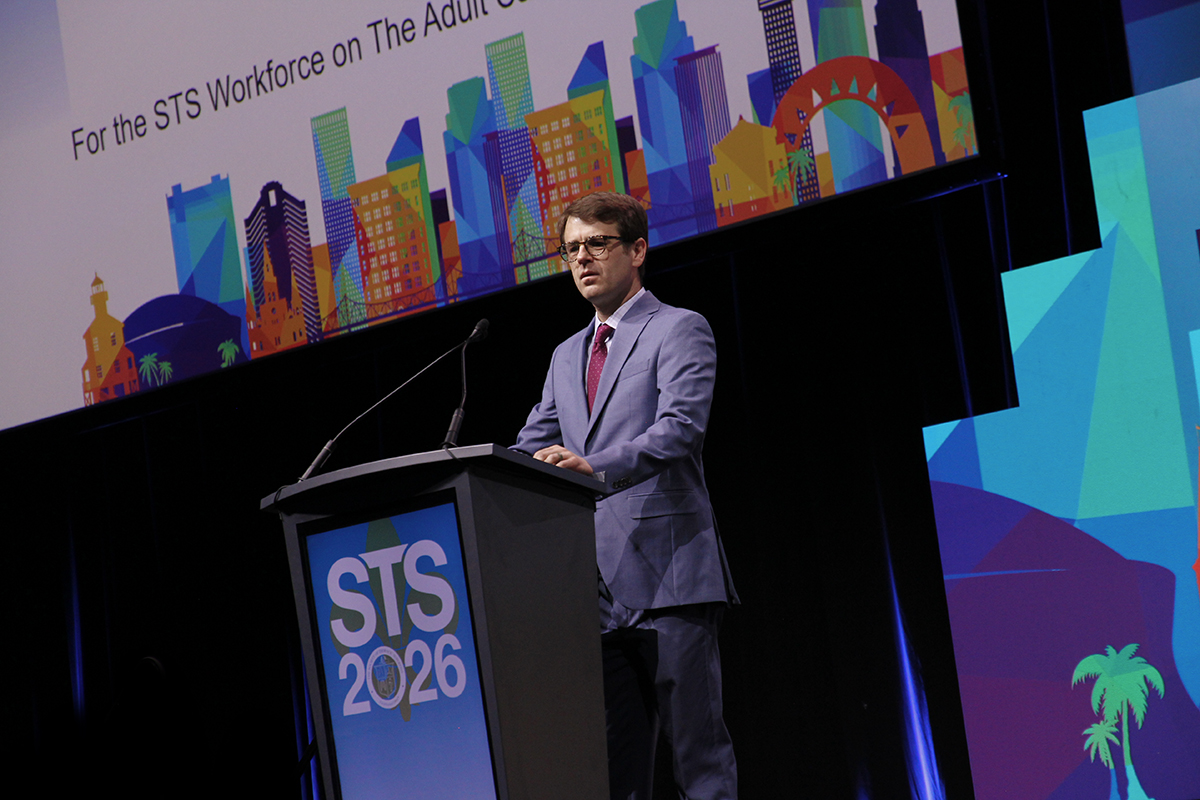
“We can see that patient related factors have declined over time as lower risk and younger patients undergo TAVI. However, outside of this, surgeons appear to be improving their technique as risk of mortality has decreased 3% every year over and above patient related factors,” presenting author Robert Hawkins (University of Michigan Health, Ann Arbor, USA) tells Cardiovascular News following his presentation at STS 2026.
“Surgeons appear to be improving their technique as risk of mortality has decreased 3% every year over and above patient related factors.”
Robert Hawkins
Among the 5,708 cases included in the analysis, 40% involved isolated SAVR after TAVI, with 60% including concomitant procedures such as aortic root enlargement, mitral procedures, CABG or tricuspid replacement. Seventeen per cent of explants took place in the same admission as the initial TAVI, he reported.
Operative mortality stood at 8.2% for isolated SAVR cases, whereas those requiring a concomitant procedure were associated with higher complication rates, totalling 17.6% for CABG, 24.9% when performed alongside an aortic root enlargement, 15.9% with procedures in the ascending aorta, and 19.2% with associated mitral valve procedures—representing an overall operative mortality of 14.4%.
Hawkins reported that there was a decrease in complications over time in each of the eight outcomes, including operative mortality, permanent stroke, renal failure, prolonged ventilation, reoperation, morbidity and mortality, with 3% decreased odds of mortality each year.
“Risk was driven by concomitant pathology requiring mitral or tricuspid valve procedures, and this points to the importance of the first aortic valve procedure,” comments Hawkins on the factors contributing to a patient’s risk profile over time. “Concomitant valve, coronary or atrial fibrillation (AF) pathology should be addressed, and usually can be best addressed with surgery. Timing of the TAVI explant also is important and hyperacute (emergent TAVR explant) carries high risk.”
He said that he hopes that alongside guiding decision making at the point of reintervention, the new risk model will give heart teams food for thought at the point of the initial valve intervention as well.
“This risk model will help inform decisions on how to handle the second valve choice with a failed TAVI valve,” he commented. “However, we hope that the heart team is able to use the risk calculator to learn how decisions at the time of the first valve implant impact lifetime management. The drivers of high risk at the time of TAVI explant should be addressed whenever possible at the time of the first aortic valve replacement.”
Which procedure and when
According to Hawkins there are some “clear reasons” to select TAVI explant over valve-in-valve TAVI, most notably when surgery is needed to address non-TAVI pathology such as mitral stenosis or complex coronary disease.
For isolated TAVI failure, he adds, the risk model will help to provide accurate information on the likely low surgical risk associated with TAVI explant. “Many patients and referring doctors are wary of TAVI explant, and that bias may incorrectly label valve-in-valve [TAVI] as the better option. This risk model will help provide the information needed to make well informed decisions from a lifetime management perspective.”
Furthermore, many of the patients with isolated TAVI are categorised as having low surgical risk, highlighted by the last two years (2023–2024) of data where the mortality rate for isolated SAVR after TAVI in patients who could potentially have undergone redo-TAVI stood at 3.5%.
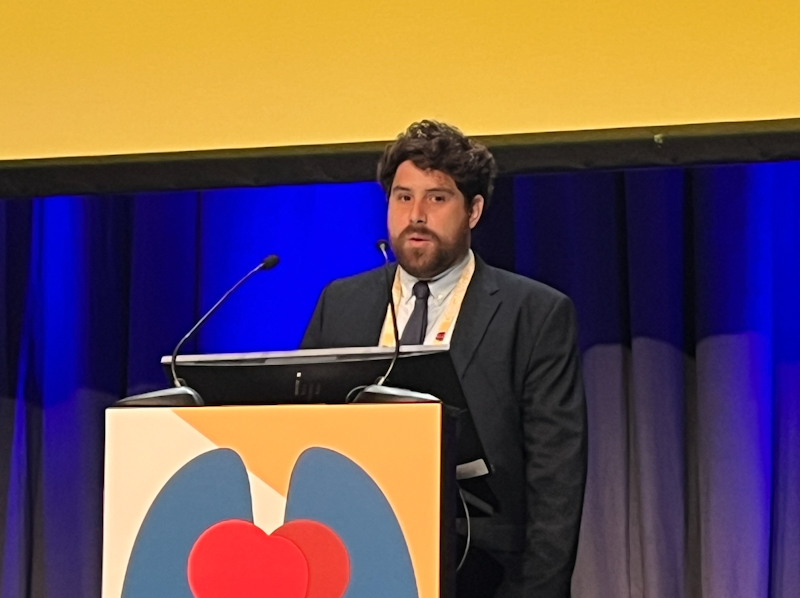
Providing a European perspective on TAVI explant trends, Mateo Marin-Cuartas (Leipzig Heart Center, Leipzig, Germany), one of the researchers behind the EXPLANT-TAVR registry, tells Cardiovascular News that “there are indeed hints of improvement in operative mortality for isolated SAVR after TAVI”, but says caution is warranted as mortality rates remain unacceptably high.
He adds that considering factors such as the potential presence of infective endocarditis, which was excluded from a sub-analysis of valve-in-valve candidates from the STS data, and the proportion of patients undergoing explants during the same admission as their TAVI procedure—that Hawkins describes as having been identified within the risk model as being a significant risk factor—may colour the interpretation of the results.
“Improvements might be partly due to greater experience and procedural volume: surgeons are performing more explants and are more involved in transcatheter procedures, so we better understand how these valves work and can remove them more effectively,” he said. “But, even with that progress, we must be realistic. When we factor in endocarditis cases and fewer early explants, the real-world mortality is likely even higher. So, we must be measured in how we frame these improvements.”
Marin-Cuartas echoes Hawkins’ comments that these data should put more focus on decision-making around the choice of index procedure, particularly in younger patients who may require several interventions over time.
“We need to think much more consistently in terms of lifetime management, particularly in younger patients, where the likelihood of needing a second, or even third, intervention after an initial TAVI is high,” he adds. “This is especially relevant because, in contrast, redo SAVR after prior SAVR is a well-established and well-understood procedure. The outcomes are consolidated, and in many contemporary series, the risk of redo SAVR is comparable to primary SAVR when performed in experienced centres. That predictability stands in clear contrast to the much higher risk we currently see with SAVR after TAVI.”
Marin-Cuartas said that there is no similar risk model to support decision-making in wide use in Europe, but says that it “would certainly be useful”, particularly in cases where patients may equally be candidates for TAVI valve-in-valve or SAVR, whilst recognising that there is a need to offer some tools that support decision-making in patients with endocarditis.