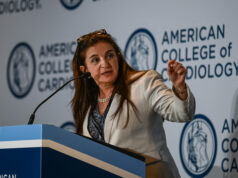
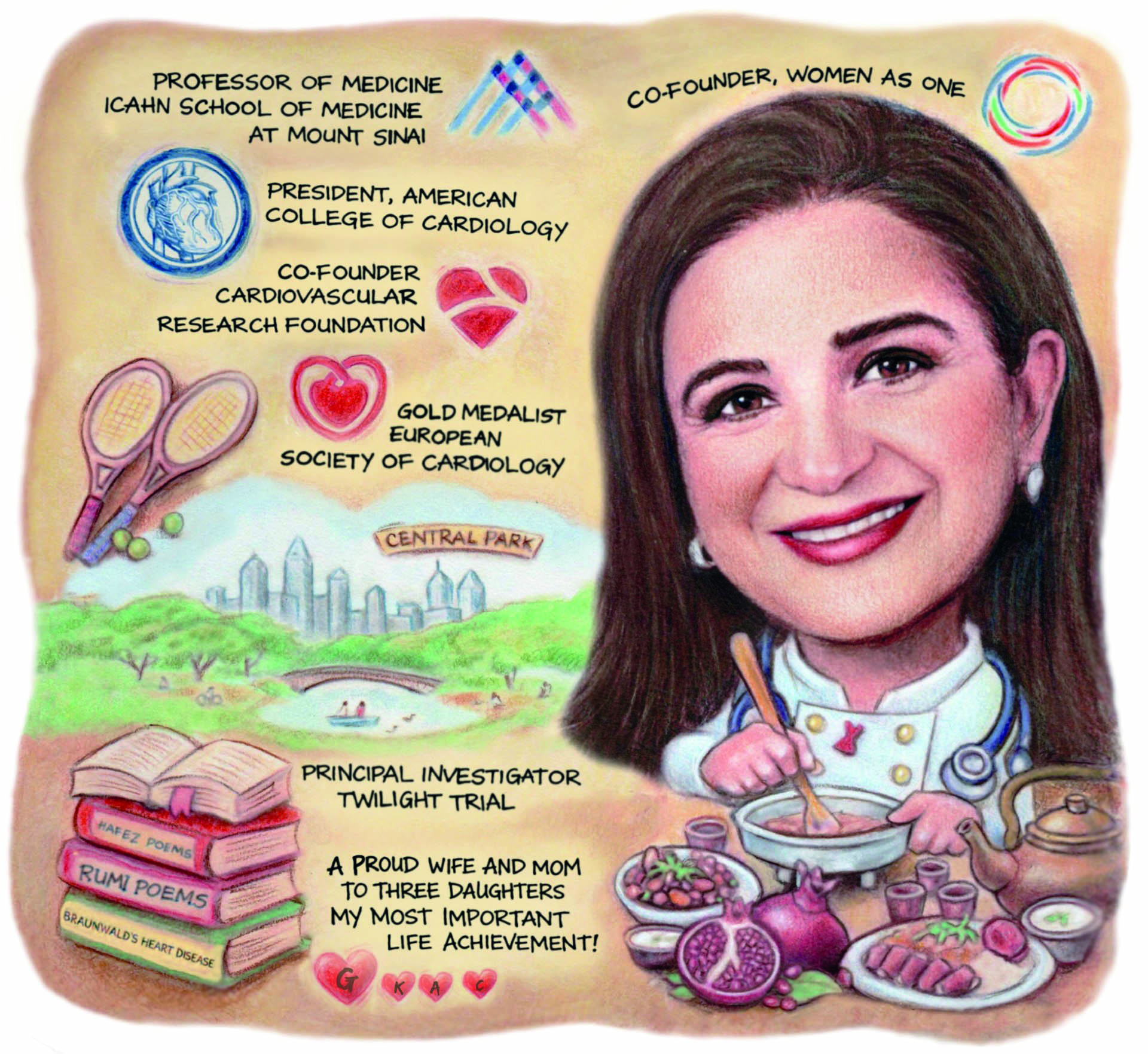
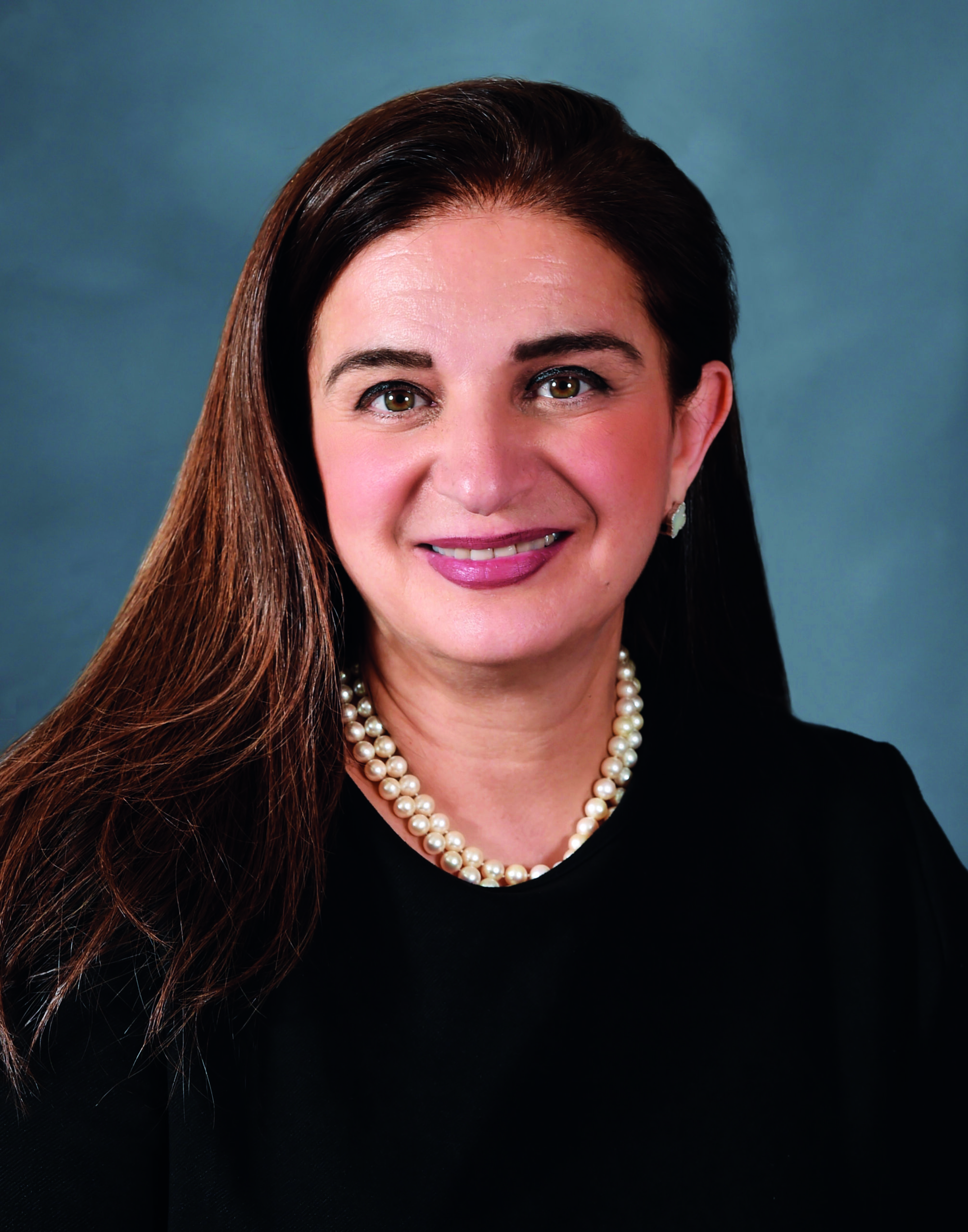
 Roxana Mehran is an interventional cardiologist and clinical trialist whose work as a clinician, researcher, and educator has established her as one of the world’s leading figures in the field. Ahead of her tenure as president of the American College of Cardiology (ACC), Mehran speaks to Cardiovascular News about her career in medicine, how a dedication to public service has shaped her work, and her mission to level the playing field in cardiology.
What drew you to medicine and then to interventional cardiology in particular?
I was born in Iran and grew up there until about the age of 13, before moving to the United States. From an early age, I was drawn to STEM disciplines—particularly biology and chemistry—and to understanding how the scientific world works.
As I developed as a person, I also came to recognise the importance of helping and serving others. This was largely influenced by my parents and their guiding philosophy of life, which centred on service and giving back. We were taught that whatever we do should have a lasting positive impact, and that every action has consequences.
My interest in medicine deepened when my younger brother became ill shortly after we arrived in the USA. He was hospitalised for several weeks with an illness that initially defied diagnosis. It was eventually identified as a paediatric post-viral illness, but I vividly remember watching him undergo repeated tests and thinking, why can’t they solve this puzzle? The idea of confronting and solving medical challenges every day was deeply compelling to me, and I felt immediately at home in the hospital environment.
During training, as I rotated through various subspecialties, I realised how much I loved all aspects of medicine. I gravitated toward cardiology because it is an extraordinary field—one defined by both established knowledge and unanswered questions, with an unparalleled ability to reduce disease burden and improve outcomes.
At that time, interventional cardiology was still in its infancy. The opportunity to understand device mechanisms, apply less invasive treatments for cardiovascular disease, and directly improve patient outcomes strongly influenced my decision. I could clearly envision a career that combined clinical care with clinical research—finding answers at the bedside. The immediacy of treating critically ill patients using devices and pharmacology was, and remains, profoundly motivating. It became crystal clear to me that interventional cardiology was the right path. I knew I was exactly where I belonged.
Who have been the individuals who have influenced you the most during your career?
During my residency at the University of Connecticut, I met Arnold Katz, an extraordinary mentor who taught me what it truly means to be a sponsor—someone who genuinely invests in another person’s journey. When I met him in 1987, I was an intern filled with enthusiasm but little confidence that I would ever achieve my aspirations. Through his vision and perseverance, I was given my first major opportunity: working closely with his team on important basic science research.
Following that, I had the privilege of working with several giants in cardiology, including Richard Gorlin, Milton Packer, Valentín Fuster, Samin Sharma, Alice Jacobs, and Linda Gillam. They were not only leaders in discovery and patient care, but also deeply committed to training and sponsoring the next generation. From them, I learned the importance of mentorship as a defining professional responsibility.
The most influential mentor in my career has been Martin Leon. At a time when there were very few women in interventional cardiology, he was completely gender-neutral in offering opportunities. He trusted me, invested his time, gave me visibility, and actively supported my growth. He played a pivotal role in shaping me as a clinician-scientist.
Reflecting on these individuals, I feel profound gratitude as a mentee and beneficiary of their support. I strive to incorporate their best qualities, add my own perspective, and pay that commitment forward.
What has been the biggest change in interventional cardiology throughout your career?
It feels remarkable to consider that nearly 50 years have passed since Andreas Grüntzig first demonstrated balloon angioplasty in a dog model at the 1976 American Heart Association (AHA) meeting. Since then, the field has experienced transformative change.
Interventional cardiology has profoundly improved care for patients with coronary and valvular heart disease, acute coronary syndromes, cardiogenic shock, peripheral arterial disease, and heart failure. At the same time, we continue to confront residual risk and persistent disparities in care.
The impact we have achieved extends beyond procedures themselves. Early diagnosis, rapid recognition, swift intervention, and the integration of increasingly sophisticated devices with preventive medical therapy have together reduced cardiovascular morbidity and mortality.
Transcatheter valves and percutaneous coronary intervention have improved not only hard clinical endpoints, but also patient-reported outcomes and quality of life.
Can we do better? Absolutely. Can we prevent cardiovascular disease in the first place? Without question. The future lies in earlier diagnosis through advanced imaging, better identification of vulnerable patients, and proactive intervention. Critically, we must ensure that these life-saving therapies—pharmaceutical and device-based—are accessible to all.
How do you reflect on your upcoming term as ACC president and what would you hope your legacy from that will be?
The ACC’s mission is to transform cardiovascular care for all, and its members are the driving force behind that mission. They deliver care at the bedside, conduct groundbreaking research in laboratories, and translate discoveries into evidence through clinical trials.
Leadership, to me, is fundamentally about public service. True leadership cannot be self-serving. That principle has guided me since my earliest days in medicine, and it is what ultimately brings people into leadership roles.
One of my strengths is recognising how much more we can accomplish together. Cardiovascular disease remains the leading cause of death worldwide. Addressing it requires global collaboration, across societies and borders.
Over the past 30 years, I have worked closely with major cardiovascular societies, including the ESC, AHA, SCAI, and ACC. I firmly believe that advancing our strategic missions demands unified effort. I am committed to strengthening these collaborations and confident that we will succeed.
I am also a strong advocate for public–private partnerships. Working together is essential to extending high-quality cardiovascular care to urban, rural, and vulnerable populations worldwide.
You have strongly advocated for women in the field of cardiology, including co-founding the Women as One initiative. At what stage in your career did you recognise that concerted action was needed to better represent women in the field of cardiology?
Cardiovascular disease is the leading cause of death in women globally, yet there are disproportionately few cardiologists specialising in women’s heart disease—and most of those who do are women themselves. This imbalance is unsustainable.
When I began my career, I was often the only woman in the room. Women were treated differently, compensation was unequal, and expectations were inconsistent. Many exceptionally talented women left interventional cardiology because the environment was simply too unwelcoming.
I realised we needed an organisation dedicated to supporting women in medicine—one that would provide a home, a network, and a platform to elevate their careers. Women who have worked tirelessly, demonstrated excellence, and contributed meaningfully to cardiovascular care deserve equal opportunity and recognition. Progress is happening, but there is still significant work to be done.
When you reflect on the progress that has been made in levelling the playing field for women where do you think we are in 2026?
We have made meaningful progress in opening doors, but now the priority must be sustained advancement. With progress comes responsibility: as we climb, we must lift others with us.
Our obligation is not only to help women attain leadership positions, but to ensure they have clear pathways forward and remain engaged long term. While some major barriers have been removed, there are still obstacles—perhaps smaller, but persistent. We’ve moved the boulders, but there’s still gravel in our shoes.
You contributed to the Lancet Women and Cardiovascular Disease Commission—how do you reflect on the impact that this has had in moving the dial for the treatment of women with cardiovascular disease?
This year, we will release a five-year progress report alongside a women’s cardiovascular health summit. This will allow us to evaluate what has been achieved, where progress has stalled, and why.
Reducing cardiovascular disease in women requires studying disease through a fundamentally different lens—not treating women as “small men,” but recognising sex as a biological variable and understanding the clear differences between the sexes. Excluding women of childbearing age from clinical trials—effectively four to five decades of life—has left critical gaps in our understanding of disease evolution in women. Without this knowledge, our ability to intervene meaningfully remains limited.
Do you feel a sense of responsibility as a role model for women in cardiology?
Absolutely. It is a profound responsibility—one that carries weight, but also purpose. I am deeply committed to advancing a new paradigm in cardiovascular medicine that recognises sex-specific biology, enables earlier diagnosis, refines risk assessment, and delivers effective, equitable care for all.
As a leader in research into optimal antiplatelet therapies post PCI how do you see this field evolving in the era of personalised medicine?
Antiplatelet therapy is clearly not one-size-fits-all. Today, there are more than two million possible permutations across key decisions—agent selection, timing, duration, and de-escalation.
Precision is essential. We now have unprecedented volumes of data, and we must integrate technology into electronic health records to enable predictive, individualised decision-making at the point of care. I am confident that this evolution will continue.
You participated as an investigator in the recent SELUTION4ISR trial, how significant is this trial for advancing drug-coated balloon (DCB) research?
Stent technology has advanced dramatically, with restenosis rates now in single digits—an extraordinary achievement. However, in-stent restenosis remains a significant clinical challenge.
Through my work, I have identified distinct patterns of restenosis that require tailored approaches. While additional stenting may be appropriate in focal edge restenosis, it is not acceptable to add multiple metal layers in biologically or mechanically complex disease. Drug-coated balloons offer an important alternative, and the SELUTION4ISR trial represents a critical step in evaluating their role under rigorous regulatory standards.
How did your interest in contrast-induced nephropathy after PCI come about?
While working with Marty Leon at Washington Hospital Center, I became deeply involved in reviewing angiographic data and long-term outcomes. We observed that patients who developed acute kidney injury following contrast exposure consistently experienced worse outcomes.
This observation ultimately led to the development of the Mehran Risk Score. Today, the incidence of contrast-induced acute kidney injury has declined to approximately 3–4%, reflecting the impact of improved risk stratification and preventive strategies.
What are your current research interests?
My focus is on integrating prevention with intervention—enhancing procedural outcomes, reducing complications, and improving long-term health. This applies not only to coronary disease, but also to structural heart interventions. The ultimate goal is early prevention to avoid the need for intervention whenever possible.
Which recent trials have interested you?
The VESALIUS-CV trial, presented by the TIMI study group, was particularly striking. It demonstrated that preventing a first cardiovascular event—through interventions such as LDL reduction—can reduce events by close to 40% and significantly lower mortality. It powerfully reinforces the central role of prevention.
What does your life outside of medicine look like?
Much of my downtime is spent in nature—walking, especially in Central Park, reflecting, and reconnecting with the world around me. Travel has often been work-focused, leaving little time for exploration, but I truly enjoy meeting the world outside of my comfort zone. My biggest joy is down time with my family, cooking and following several sports. I am an avid Tennis fan; I enjoy the competition, commitment and the intangibles in the game. It’s a beautiful life, and we must remember this all the time to put it all in perspective. Self-care is something I am committed to prioritising more intentionally in the years ahead.