For Jacqueline Lewis, a former nurse and pharmaceutical industry executive, the path to heart valve surgery was far from straightforward. In early 2024, shortly after turning 63, she found herself frequently feeling out of breath during her day-to-day activities, which, she said, was out of character for someone who had regularly run and practiced yoga throughout her life.
Concerned by these warning signs, Lewis consulted her GP, where she was told that the symptoms could be linked to anxiety or the menopause, but was nevertheless referred to a cardiologist who promptly diagnosed left ventricular hypertrophy, necessitating an angiogram.
Link: Shaping the future for women with heart valve disease
“The results of the angiogram came back and they said it wasn’t angina—but I hadn’t thought that was what it was, as I wasn’t getting chest pain—it was palpitations and breathlessness. At that point I was discharged,” Lewis tells Cardiovascular News of the confusion and worry associated with her diagnosis and initial care.

After trying and failing to seek further consultation to get to the root of the problem, in between which she was forced to give up work due to her deteriorating health, Lewis eventually sought the advice of another cardiologist, who, upon listening to her heart with a stethoscope, immediately recognised that she would need aortic valve surgery, which she underwent successfully some 12 weeks later. “If I hadn’t had the knowledge I have got, and the confidence to stand up and say ‘I need to be listened to now’, where would I be?” Lewis says, reflecting on how her previous experience of having worked in the healthcare industry ultimately helped her to achieve a satisfactory outcome.
Many women, however, may not be so fortunate. A new report from Global Heart Hub, an international alliance of heart patient organisations—Shaping the future for women with heart valve disease—suggests that Lewis’s experience is far from isolated and that, for a multitude of reasons, heart valve disease is going undiagnosed and untreated in scores of women worldwide.
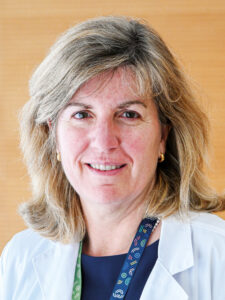
Lewis is among the contributors to the report, one of several patients to provide a perspective on the care pathway for the detection, treatment and management of heart valve disease, alongside clinicians such as Marta Sitges, a non-invasive cardiologist at Hospital Clinic Barcelona (Barcelona, Spain), bringing expertise from the healthcare community. Both Lewis and Sitges are co-chairs of this initiative. Drafting of the report followed structured interviews and a subsequent in-person roundtable to reach a set of recommendations actions to drive change across a broad set of areas from diagnosis to clinical recruitment and elsewhere.
Sitges tells Cardiovascular News that, in her view, there are a host of reasons why the treatment of heart valve disease may require a different approach when dealing with women compared to men. “There are differences in the type of disease, there are differences in the way they present, and, this is more difficult to prove, but definitely there are differences in the way the symptoms are interpreted,” she says.
Important distinctions highlighted in the report include, for example, that in females, aortic stenosis is typically characterised by less calcification and more fibrotic remodelling of the aortic valve when compared to males, whilst mitral valve disease is more often associated with mitral valve prolapse or rheumatic disease in women, who have a higher prevalence of mitral stenosis when compared to men.
What’s more, Sitges says, women may have a harder time in convincing their healthcare provider that their symptoms are indeed related to heart valve disease at all, echoing Lewis’s difficulty in having her symptoms correctly diagnosed.
A key contributor to this issue is the historic disparity in the number of women recruited to clinical trials in cardiovascular medicine, particularly of device-based treatments, and relatively few studies focused on female-only populations—meaning that much of the current consensus on treatment is driven by studies with overwhelmingly male cohorts. Addressing this is among the main action points within the Global Heart Hub report, which sets out steps to ensure that research on heart valve disease reflects sex and gender-specific differences by actively including women in clinical studies.
“More recently, with the advent of transcatheter therapies, there have been some randomised studies in patients with heart valve disease—typically comparing one transcatheter therapy to conventional surgery or even medical therapy. In these studies many have been in a male population, not so much through the restriction of entry criteria, but rather, that these diseases involve more frequently men,” comments Sitges.
“Then comes the hypothesis of gender-related issues, that maybe sometimes it is more difficult to engage women in research—because ‘no I have to take care of my family; I can’t come to the consultations’—this is something we have an idea of, but this is not something we can objectively prove,” she adds, highlighting that even the reasons underlying the historic poor recruitment of women in trials is poorly understood.
Recent studies, including the RHEIA trial, which compared transcatheter aortic valve implantation (TAVI) to surgical aortic valve replacement (SAVR) in an exclusively female population, show that some steps are being taken to bridge this long-held data gap, whilst the latest guidelines form the European Society of Cardiology (ESC) and the European Association for Cardio-Thoracic Surgery (EACTS) on valvular heart disease contain, for the first time, distinct recommendations for clinicians to consider when treating female patients. Sitges welcomes both developments but says the pace of change still falls some way short of what is required.
“This is why this work is important, to increase the awareness of this problem,” she adds, commenting on the relevance of the recommendations within the Global Heart Hub report. “The medical community is moving forward to personalised medicine, but medicine is still very based on evidence and evidence is quite global. It is for the median, it is not personalised.”
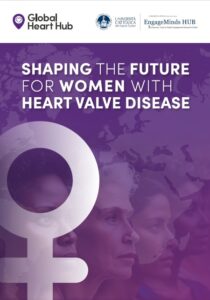
Other action points in the report include the development of comprehensive educational material to provide patients with the knowledge to recognise risks and symptoms of heart valve disease, and to better understand their treatment options, alongside implementing educational activities to promote understanding of how heart valve disease presents and progresses in women.
Expanding access to detection and diagnostic technologies to improve early detection in underserved and high-risk populations, in particular, is also advocated, alongside the establishment of screening campaigns to identify undiagnosed cases of heart valve disease among women in these high-risk groups.
Finally, the report calls for all stakeholders, including policymakers, healthcare providers, patient organisations and wider society to work together to establish person-centred care based on equal access and opportunities at every stage.
Global Heart Hub in collaboration with Heart Valve Voice UK and Heart Valve Voice Canada will host a session titled ‘Learning from Lived Experience and Contemporary Evidence: Shaping the Treatment of Women with Heart Valve Disease’. It will take place on the second morning of the upcoming PCR London Valves meeting (16–18 November, London, UK). The session will feature a patient and several clinicians, highlighting the lived experience of women with valvular heart disease, and discussing diverse perspectives of the unique challenges of the detection, diagnosis, treatment and follow-up of women with these conditions.