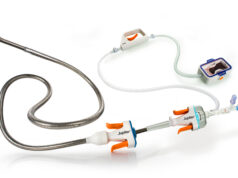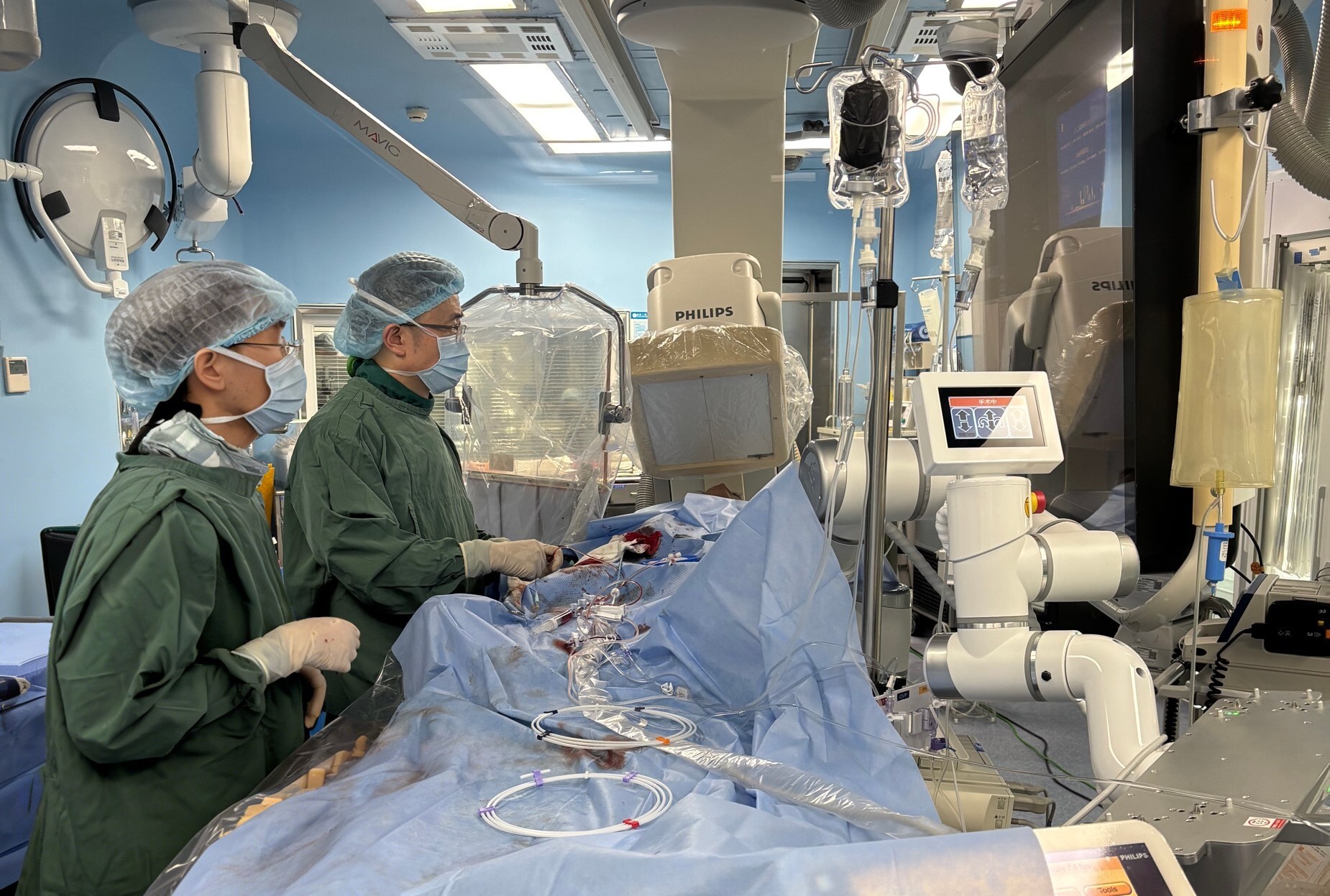
Enginprime Medical has announced that its percutaneous ventricular assist device (pVAD), OpusOne, has entered its first-in-human clinical study at the Second Affiliated Hospital, School of Medicine, Zhejiang University (SAHZU, Hangzhou, China). This milestone marks the first clinical evaluation of the device’s safety and performance in patients.
PVAD supports the cardiac output via a percutaneously implanted pump, reduces the load of left ventricle, relieves heart failure symptoms, and bridges to transplantation or recovery. It also delivers temporary haemodynamic support during complex, higher-risk indicated patients’ percutaneous coronary intervention (CHIP PCI) procedures by augmenting cardiac output, preserving organ perfusion, and stabilising haemodynamics for safe intervention.
While over 60,000 pVAD procedures are performed globally each year, no pVAD product has been approved in China yet.
OpusOne features an ultra-low profile down to 8Fr, external durable motor placement, and a foldable, self-expanding impeller, capable of delivering 4–5L/min of average flow with peak flows exceeding 7L/min.
The device integrates invasive blood pressure monitoring and a patented perfusion purification system, enabling migration detection alerts while preventing wear particles from entering the patient’s body.
“Enginprime’s OpusOne exemplified a promising approach to temporary ventricular support—especially for high-risk patients who can benefit from enhanced haemodynamic stability. Co-developed by the interventional cardiologists and Enginprime, this promising solution is tailored to address unmet clinical needs,” said the study’s lead investigator Jian’an Wang (SAHZU, Hangzhou, China). “I am impressed by its ability to achieve high flow with such a low-profile design. OpusOne’s optimisation of access and positioning options increases procedural safety.”
Co-investigator of the study, Jun Jiang (SAHZU, Hangzhou, China), added: “We are pleased to perform the first procedure with OpusOne, seeing the patient’s chest tightness was significantly alleviated. Its robust initial performance marks a meaningful advancement in circulatory support and great potential for expanding patient eligibility.”