Coronary artery bypass graft (CABG) surgery performed ‘off-pump’—without the use of cardiopulmonary bypass (CPB)—is associated with significantly lower perioperative morbidity and mortality compared with on-pump CABG, while long-term survival outcomes were largely equivalent across techniques in the hands of experienced surgeons.
These were the conclusions of an analysis of more than 15 years’ worth of follow-up data taken from the Society of Thoracic Surgeons (STS) Adult Cardiac Surgery Database, the society’s national database for tracking clinical outcomes. The study, led by John Puskas (Emory University Hospital Midtown, Atlanta, USA), analysed outcomes for non-emergency, isolated CABG procedures performed between 2008 and 2023.
Puskas and colleagues sought to compare off-pump CABG (OPCAB) and on-pump CABG (ONCAB) when each approach was performed by surgeons with extensive, technique-specific experience.
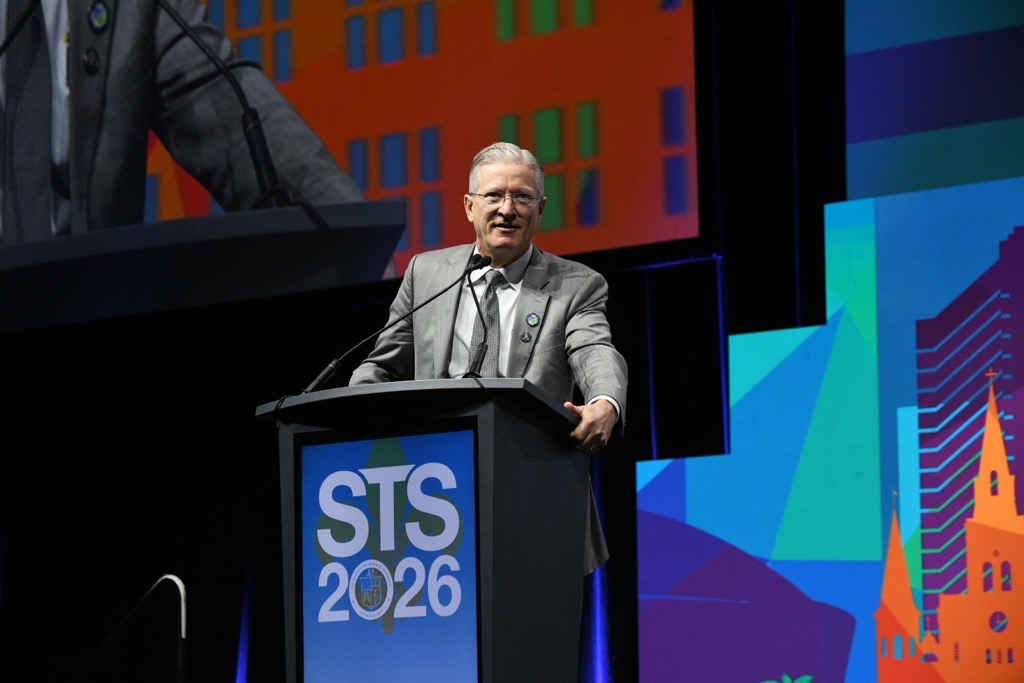
Numerous retrospective and prospective randomised studies have documented improved perioperative and 30-day outcomes with OPCAB, Puskas, who presented the findings of the study during a late-breaking trials session at the STS’s 2026 annual meeting (29–31 January, New Orleans, USA), said, adding that studies have diverged on whether OPCAB offers completeness of revascularisation, graft patency and long-term survival outcomes similar to those achieved ONCAB.
Surgeon experience may be key to optimising results with both OPCAB and ONCAB, Puskas noted, detailing that the study’s primary objective was to compare risk-adjusted intermediate (0–five-year) and late (0–15-year) mortality outcomes of OPCAB versus ONCAB surgery overall and stratified by the extent of coronary artery disease. The investigators also sought to document surgeon and volume trends the two approaches in the USA over the past two decades.
Long-term survival was determined through linkage to the National Death Index and Centers for Medicare & Medicaid Services (CMS) inpatient data, with follow-up extending through December 2024.
To ensure a rigorous comparison, the analysis included only surgeons meeting strict criteria for experience and procedural volume, and outcomes were assessed using intention-to-treat methodology. More than 184,000 OPCAB cases and 1.34 million ONCAB cases were identified. After propensity matching based on 64 preoperative variables, researchers created more than 184,000 closely matched patient pairs.
Results showed that patients undergoing OPCAB experienced significantly better perioperative and 30-day outcomes, including lower operative mortality, reduced rates of stroke, atrial fibrillation (AF), renal failure, reoperation, prolonged ventilation, and blood transfusion. However, OPCAB was associated with higher rates of incomplete revascularisation and a slightly lower average number of grafts per patient, while use of multiple arterial grafts was more common in the off-pump group.
Long-term analysis revealed that the early survival advantage seen with OPCAB diminished over the first five years following surgery. At 15 years, a small survival advantage re-emerged among patients with single-vessel coronary artery disease, but no significant long-term survival difference was observed in patients with multivessel disease.
“These findings highlight that when performed by experienced surgeons, both off-pump and on-pump CABG can deliver excellent long-term outcomes,” said Puskas. “Patients at high risk for operative/perioperative morbidity and mortality may benefit most from OPCAB by an experienced OPCAB surgeon. Our results emphasise the importance of surgeon experience, complete revascularisation, and use of multiple arterial grafts—regardless of surgical technique and may support the concept of coronary surgery as a subspecialty of adult cardiac surgery, benefiting from specialised training and expertise.”
According to the investigators, the study underscores the value of the STS National Database in answering complex, clinically relevant questions that cannot be addressed through randomised trials alone. The scale, depth, and long-term follow-up of STS data allowed researchers to examine outcomes across 15 years in a real-world population while accounting for surgeon experience and patient complexity.