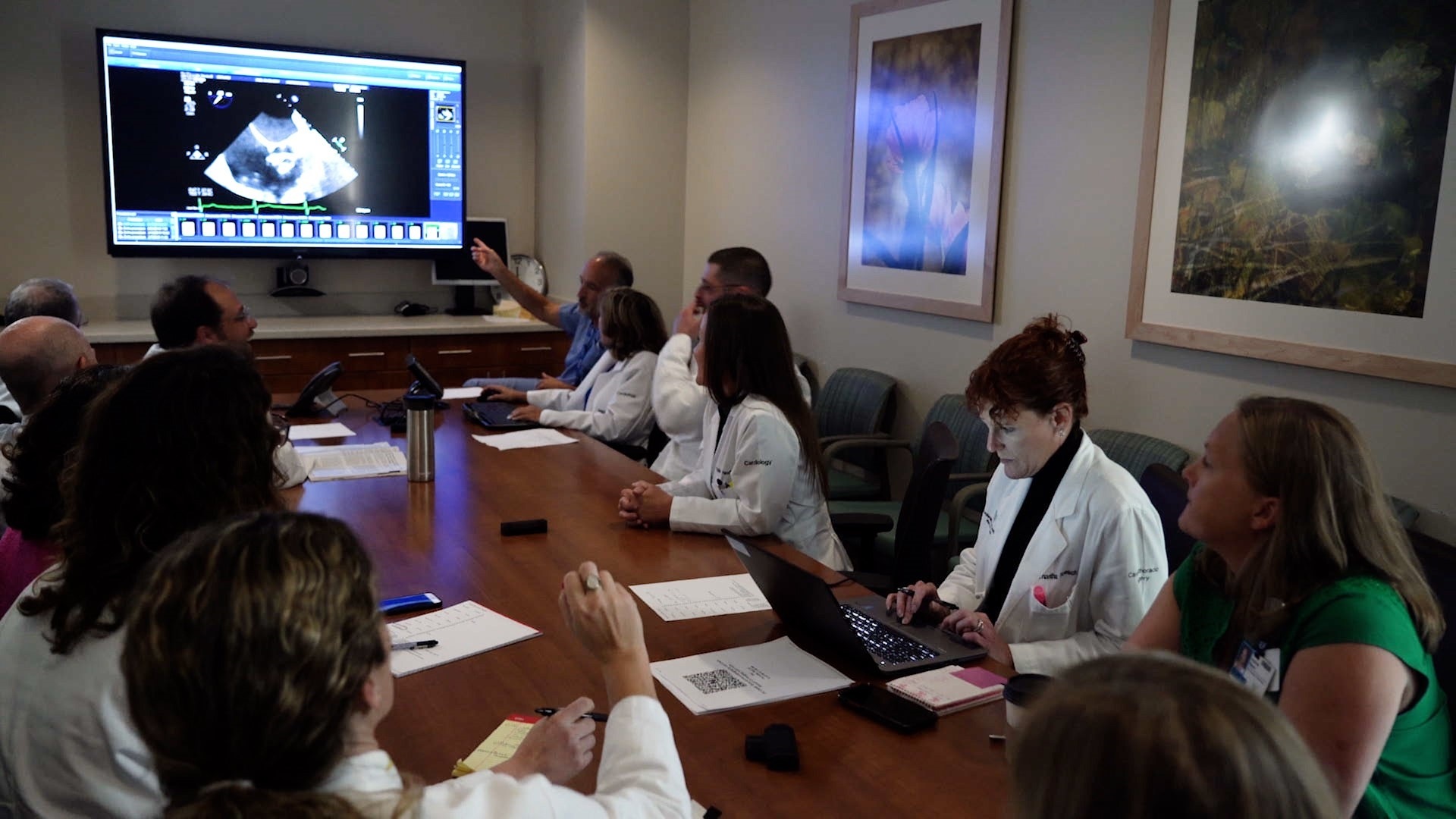
 A survey of cardiac surgeons and interventional cardiologists from 26 European nations has highlighted “marked variability” in the infrastructure and composition of heart teams in different institutions.
Researchers behind the survey, results of which were published in the journal Interdisciplinary Cardiovascular and Thoracic Surgery, have stated that the findings underscore the need for standardisation on the definitions and guidance for the implementation of heart teams at the institutional level.
The heart team concept—a collaborative approach to determine treatment strategies and to ensure multidisciplinary participation in procedures—has emerged in recent years as an important principal endorsed by a number of professional societies, and is endorsed in US and European guidelines as a requirement for the management of cardiovascular disease.
Research from a single centre in Canada has suggested that consultation by a heart team may contribute to an observed benefit in patient outcomes, though further research has suggested that centres with experienced transcatheter aortic valve implantation (TAVI) programmes saw a drop-off in shared decision-making. In a paper published in JAMA: Network Open in 2020, researchers found differing recommendations in up to one-third of cases when comparing the decision-making of individual interventional cardiologists to those of a heart team.
The purpose of the survey is to determine whether the heart team approach is being applied in the different institutions across Europe and to determine the real-life practices of patient management in each institution.
Survey
Researchers identified cardiologists and cardiac surgeons through member databases on cardiology and surgical societies, who were contacted with a list of 47 questions focusing on the composition of the heart team in different institutions, execution of the heart team, institutional guidelines for ad hoc interventions, documentation of decision and understanding of the decision-making process undertaken by the team.
In total 2,188 clinicians were invited to take part in the survey, with 220 ultimately taking part. Of the respondents, 64% were cardiac surgeons, and 36% cardiologists.
Of those responding, 91% replied that they did have a heart team within their hospital, with over 50% reporting that such a team should comprise a cardiac surgeon, general cardiologist, interventional cardiologist, imaging cardiologist and/or anaesthetist.
Furthermore 54% responded that there should be a minimum quorum required for a heart team meeting to take place, with over 50% agreeing that at least a general cardiologist, imaging cardiologist, interventional cardiologist, cardiac surgeon or heart team coordinator should be present during the heart team meeting.
On the conduct of the heart team, 55% of respondents noted that they had weekly heart team meetings, with 66% of respondents stating that the heart team meeting typically lasts for one hour, and 73% noting that this takes place in person.
When asked to provide details of the types of patients discussed during heart team meetings, 82% responded that most patients undergoing percutaneous coronary intervention (PCI) were not discussed, while 56% considered 10–20% of the patients undergoing PCI as being relevant for discussion. Almost half, 49%, of those responding reported a lack of institutional guidelines for ad hoc PCI or other ad hoc interventions.
On decision-making and auditing processes, 83% of respondents reported that the decision-making process of the heart team was guideline-directed, with a combination of factors influencing treatment modalities including risk score, comorbidities, clinical expertise and patient choice.
“With increasing patient complexities, advances and emergence of new therapies for cardiac pathologies, the importance of dedicated heart teams cannot be overstated,” authors Umar Imram Hamid (Maastricht University Medical Centre, Maastricht, The Netherlands) et al write in their Interdisciplinary Cardiovascular and Thoracic Surgery paper. “The rationale behind the dedicated heart team is to bring clinicians to the table who are experts in the same pathology but with different skillsets. The survey highlighted the presence of dedicated heart teams for different cardiac pathologies. This allows a more patient-centred approach and tailors the therapy to the requirement of the patient.”
Decision-making
Speaking to Cardiovascular News, the paper’s corresponding author, Peyman Sardari Nia (Maastricht University Medical Centre, Maastricht, The Netherlands) commented that the need for joint decision-making should be seen as benefitting patients, if shared expertise and decision-making leads to better outcomes.
“This is more important in our field, because interventional cardiology and cardiac surgery have become competing disciplines, fishing in the same river for the same fish,” he commented. “So, it is also important to recognise with an ageing, comorbid population and with patients having disease for life, they need lifetime management.”
Sardari Nia, who is among the individuals behind the Heart Team Academy, an organisation set up in 2020 to promote better cross-specialty working between the surgical and interventional specialties, commented that he saw a lack of “ownership” among healthcare providers and a culture that has highlighted the talents of “star” individuals over team working within the healthcare system.
The Heart Team Academy, he says, seeks to bring an academic approach to promoting the heart team concept, and aims to bring forward a standardised definition of heart team composition to help centres implementing their own heart team programmes.
Sardarai Nia has previously authored research looking at the benefit of a multidisciplinary approach for the treatment of mitral valve disease, published in the European Journal of Cardio-Thoracic Surgery in 2021, which found that patients had a greater probability of survival at five years if they were treated by a heart team with specific expertise relating to mitral valve pathology.