Two-year results from the BIOADAPTOR 1:1 randomised controlled trial (RCT), comparing the DynamX coronary bioadaptor system (Elixir Medical) to Resolute Onyx (Medtronic) drug-eluting stent (DES), have demonstrated a significant reduction in clinical outcomes.
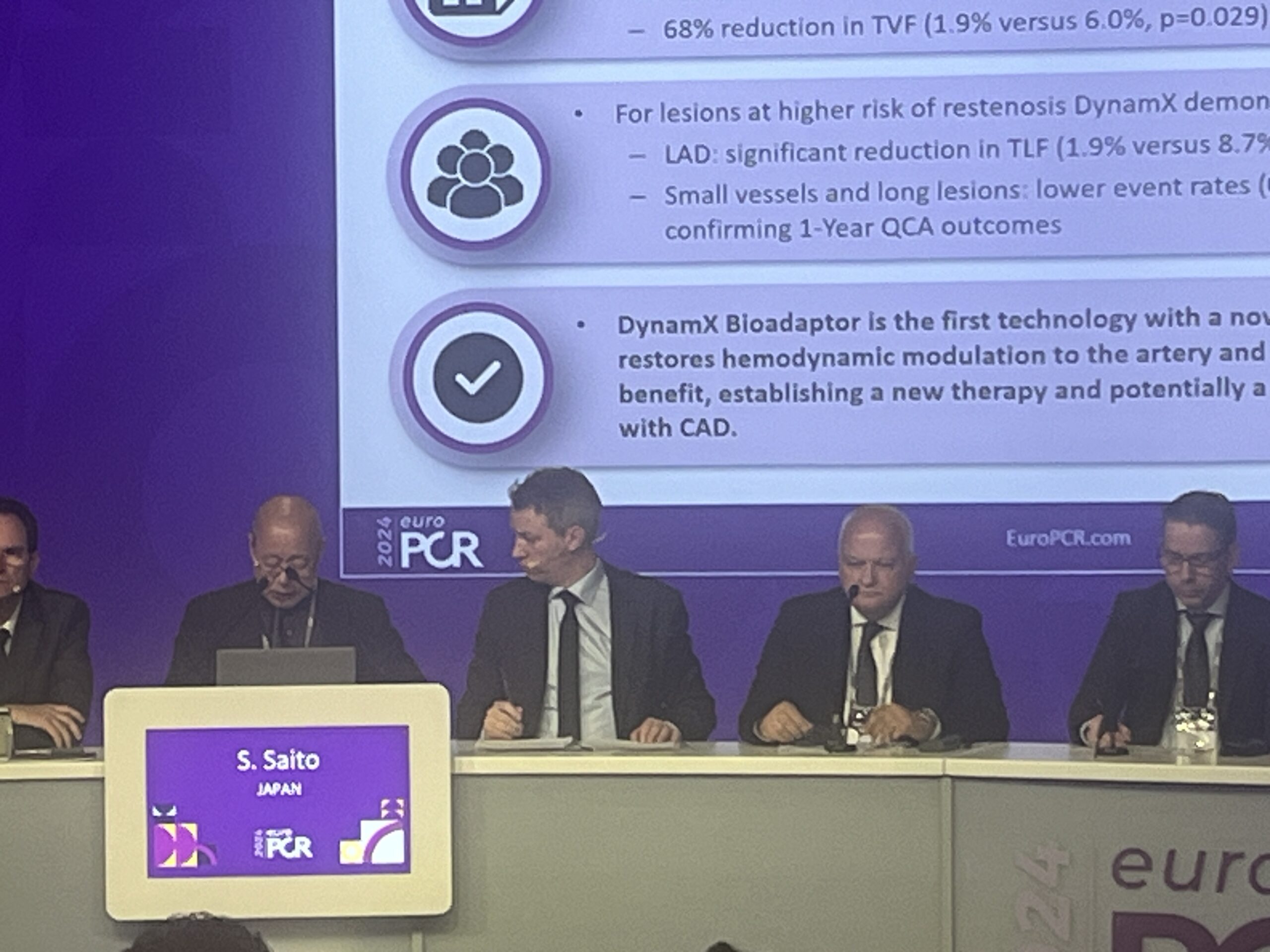
Findings from the trial, which took place across 34 centres in Japan, Europe, and New Zealand, were presented at EuroPCR 2024 (14–17 May, Paris, France) by Shigeru Saito (Shonan Kamakura General Hospital in Kamakura, Japan).
Saito reported a 65% reduction in the target lesion failure (TLF) rate of DynamX compared to DES (1.9% versus 5.5%; p=0.046), driven by low adverse events across all components of the composite endpoint with DynamX compared to DES.
The two-year results also demonstrated a 68% reduction in target vessel failure (TVF) rate (1.9% versus 6.0%; p=0.029) in DynamX compared to DES.
“These two-year results from the BIOADAPTOR RCT trial are very exciting—unlike anything we’ve ever seen before—and represent a new treatment category for patients living with coronary artery disease,” Saito was quoted as saying in a press release issued by Elixir Medical. “The TLF rate curve separation validates how the bioadaptor’s unique design and mechanism of action restores the vessel viability, including the LAD vessel.
“It does this by restoring haemodynamic modulation validating the previously demonstrated superior imaging outcomes at one year. These data show that bioadaptor offers sustained, very low event rates across all major endpoints, making it a superior option compared to DES.”
In different lesions subsets, investigators reported a 78% reduction (1.9% vs.8.7%; p=0.028) in TLF rate in left anterior descending (LAD) artery lesions treated with DynamX bioadaptor versus treatment with DES, whilst the small vessel (<2.75mm) TLF rate was 0% vs. 3.5% in DynamX versus DES, respectively, and 0% vs. 2.3% in DynamX versus DES for long lesions (>23mm).
“The 78% magnitude of reduction in clinical events in LAD lesions is particularly important, as the artery provides 50% of a heart muscle’s blood supply and undergoes significant hemodynamic movement during every cardiac cycle. Restoring its function is clearly of significant benefit,” comments Saito.