Five-year results of the pilot study of the early-generation Intrepid (Medtronic) transcatheter mitral valve replacement (TMVR) system have demonstrated sustained elimination of mitral regurgitation (MR) and durable performance of the valve.
The study, which began enrolling in 2015, charts early use of the Intrepid device featuring a transapical delivery system, though later generations of the device have switched to using a transfemoral approach. Procedures were conducted at 21 sites spanning Europe, Australia and the USA and involved 95 patients with symptomatic severe MR who were at high risk for surgery.
Michael Reardon (Houston Methodist Hospital, Houston, USA) presented the clinical and echocardiographic outcomes from the study at PCR London Valves (16–18 November, London, UK), with the findings simultaneously published in EuroIntervention.
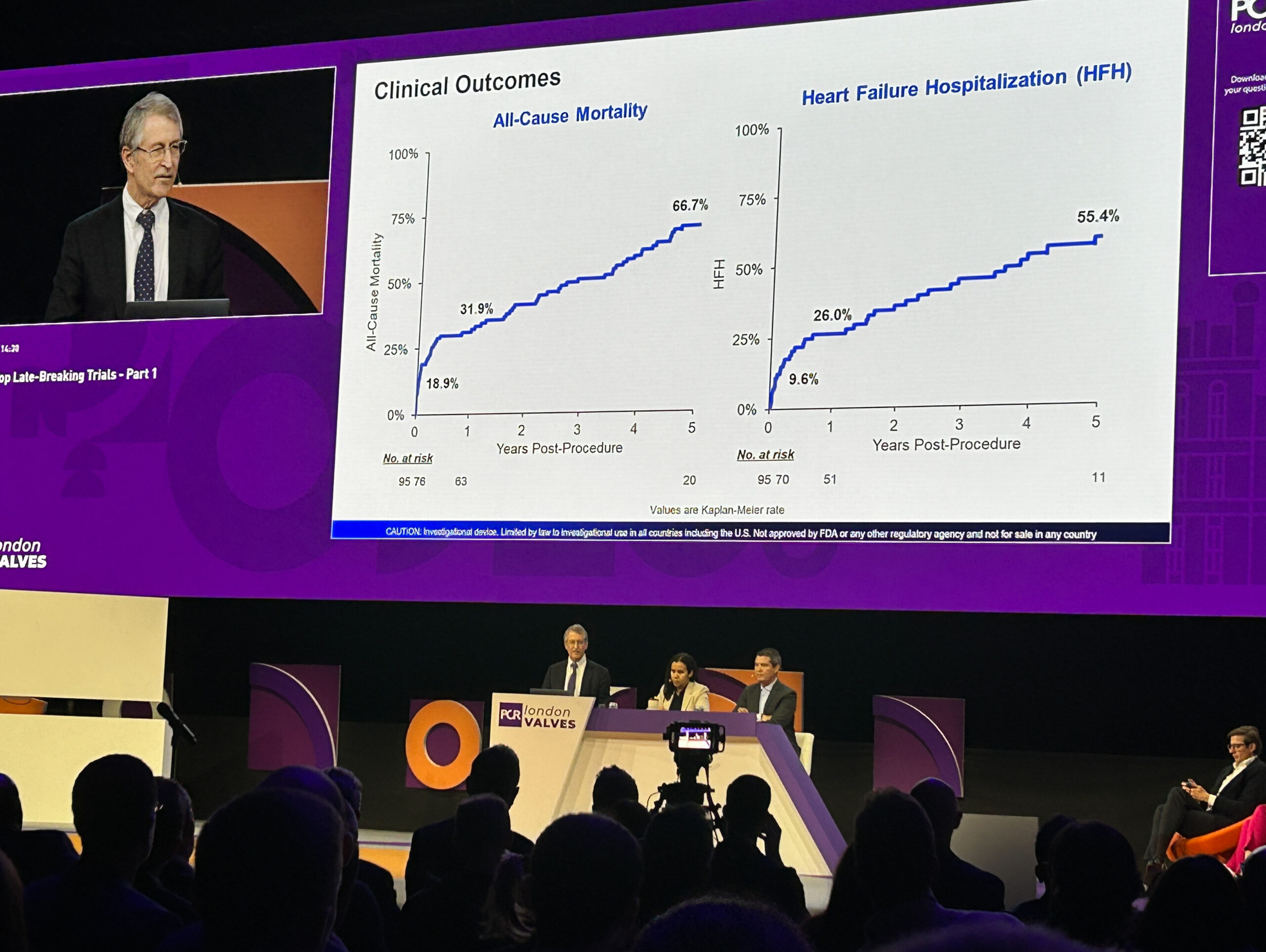
Patients had a mean age of 74 years, with 88.4% in New York Heart Association (NYHA) class III or IV and around 80% of patients had secondary MR, Reardon reported. Rates of mortality and heart failure hospitalisation steadily grew during the first six months, he detailed, commenting that this was unsurprising due to the very high-risk characteristics of the population. All-cause mortality stood at 31.9% at one year, and 66.7% through to five years, whilst rates of heart failure hospitalisation stood at 26% and 55.4% at one and five years respectively.
Comparing the clinical outcomes between the two timepoints, Reardon noted that rates of cardiovascular mortality almost doubled between one and five years, increasing from 26.1% to 51.6%, however only one in five cardiovascular deaths were adjudicated as being caused by the valve by the study’s clinical events committee. Myocardial infarction (MI) occurred in 22.9% of patients at five years, none within year one, with the majority among patients with previous MI.
Results showed that Intrepid was effective at reducing MR, with 95% of patients having moderate-to-severe or severe MR at baseline, and over 80% none or trace MR at five years, with the remainder having mild MR.
Haemodynamic valve deterioration occurred in 1.4%, median valve mean gradient remained stable at 3.6mmHg, and 84.6% of patients were in NYHA class I/II at five years, reported Reardon, commenting: “We know this is a very hostile environment, and this valve is holding up very well over that time period.”
Future study of the device, using the transfemoral Intrepid system in both the APOLLO and APOLLO-EU studies “will help determine the role of TMVR in managing this high-risk population,” Reardon concluded.