New data on the outcomes of transcatheter aortic valve-in-surgical aortic valve (TAV-in-SAV) following bioprosthetic surgical valve failure have demonstrated low rates of mortality and stroke at up to five years among low and intermediate surgical risk patients undergoing the procedure.
This is according to findings from the PARTNER 3 aortic-valve-in-valve study, presented at the 2025 Cardiovascular Research Technologies (CRT) meeting (8–11 March, Washington DC, USA) by S Christopher Malaisrie (Northwestern Medicine Bluhm Cardiovascular Institute, Chicago, USA). Malaisrie, a cardiothoracic surgeon, tells Cardiovascular News that the data provide an important contribution to surgeons’ and interventionalists’ decision-making when plotting lifetime management strategies for patients with aortic stenosis—particularly as increasing numbers of patients receive bioprosthetic surgical valves in the first instance.
“The trend now, certainly in the USA, is increased usage of bioprosthetic valves, especially in younger patients. Guidelines in Europe go down to 60 years, guidelines in the USA go down to 50 years old, so as more younger patients get aortic valve replacement with bioprosthetic valves, that means they are going to be at risk for structural valve deterioration later and will need a procedure later in life,” comments Malaisrie.
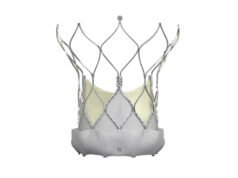
Malaisrie and colleagues previously published one-year data from the PARTNER 3 registry in 2022, showing that aortic valve-in-valve procedures using the Sapien 3 (Edwards Lifesciences) transcatheter aortic valve implantation (TAVI) valve improved haemodynamic and functional status at one year, with a 0% rate of mortality.
The five-year follow-up, reported at CRT 2025, also includes data on rates of rehospitalisation, aortic valve reintervention, echo parameters, valve durability, and quality of life outcomes including New York Heart Association (NYHA) class and Kansas City Cardiomyopathy Questionnaire (KCCQ) scores.
The study included a total of 100 low or intermediate surgical risk patients—defined as having a Society of Thoracic Surgeons (STS) score >8—treated at 29 US sites between 2016–2019 for a failed bioprosthetic aortic valve due to either aortic stenosis or regurgitation with surgical valves sized from 18.5mm out to 28.5mm. In order to be included in the study, patients had to have suitable anatomy to accommodate transfemoral access, and those with patient prosthesis mismatch (PPM) after the index procedure were excluded, as well as those with a mean gradient >20mmHg.
Patients had an average age of 67 years, and most were male, with an average STS score of 2.9 and mean gradients of 39mmHg at baseline.
Turning to the results, Malaisrie revealed that the event rate for death and stroke at five years stood at 14.7%, describing this as a “good outcome” and “remarkably low, considering these patients would otherwise have gotten a reoperative aortic valve replacement”.
Breaking down the composite outcome, Malaisrie noted that following no deaths at one year, the five-year mortality rate stood at 11.5%. “If you remember the low-risk trials—both with Edwards and Medtronic valves—with the Edwards valve at five years, the main group for native aortic stenosis was roughly 10% mortality, and the mortality for the Medtronic trial which was reported at four years was roughly 11%. So, this is good, it is comparable to TAVI for patients who have native aortic stenosis,” Malaisrie said.
The rate of stroke was also low, at 5.4% at five years, with a rate of 3.2% for disabling stroke. A fifth of patients (21%) faced rehospitalisation, with aortic valve reintervention required in 14% of patients.
Investigators were keen to understand the risk factors for aortic valve reintervention, breaking down the data to examine reintervention rates by valve size. What they noted was that valve reinterventions were more common in patients with valves sized between 17–21mm, occurring in seven out of the 40 patients with these sized valves, whilst four of the 27 patients with valves between 22–23mm required reintervention, compared to none of the 23 patients with valves between 24–27mm.
“The published data already well establishes that we should avoid 19–21mm valves because they are most at risk for gradients after valve in valve,” reported Malaisrie. “I think what this study shows and sheds some light on is that medium sized valves also are at risk of reintervention after valve in valve. You are really not free and clear unless at the index aortic valve replacement the patient had a large sized valve. In our cohort, none of those patients had an aortic valve intervention and that translated nicely to stratification in mortality from low, medium to big sized valves.”
Mean gradients remained stable at five years, with a mean of 19.6mmHg at one year, which stood at 17.6mmHg after five years. Ninety per cent of patients were free from any aortic regurgitation, meanwhile, with the figure standing at 94.2% after five years.
Malaisrie also reported that quality of life measures appeared favourable after five years, with 70% of patients remaining in NYHA class I, and KKCQ scores stable out to five years, having improved by an average of over 20 points following the index procedure.
He noted some limitations of the study, including the lack of a comparator group, that most patients were male, and a lack of consistency in the availability of post-surgical mean gradients.
“In low and intermediate risk patients with a failing surgical bioprosthetic valve, aortic valve-in-valve with Sapien 3 demonstrated low mortality and stroke rates at five years, sustained haemodynamic improvement, and this is despite aortic valve reintervention rates that are higher than in native valves,” Malaisrie said in his concluding remarks. “We think that aortic valve reintervention is associated with the index valve replacement in accordance to the size of the initial valve prosthesis the surgeon puts in, but despite that aortic valve reintervention mortality, and stroke, are comparable with the low-risk trials with native aortic stenosis. So, reinterventions did not affect mortality and stroke in this study.”
Speaking to Cardiovascular News, Malaisrie stressed the point that the sizing of the initial surgical valve appears to play an important role in the outcome of any subsequent valve-in-valve procedure, and urged heart teams to consider aortic root enlargement in cases where patients, who may require a procedure later down the line, have small aortic annuli.
“As this strategy of aortic valve-in-valve has been proven, it has gotten surgeons to think about how to optimise the first aortic valve replacement. One way we can do that is to put in as large a valve as possible. That means that surgeons are doing more aortic root enlargements, a procedure that is designed to increase the size of the aortic annulus, in order to place a larger aortic valve, and this will make the second procedure—a valve-in-valve—more successful.”